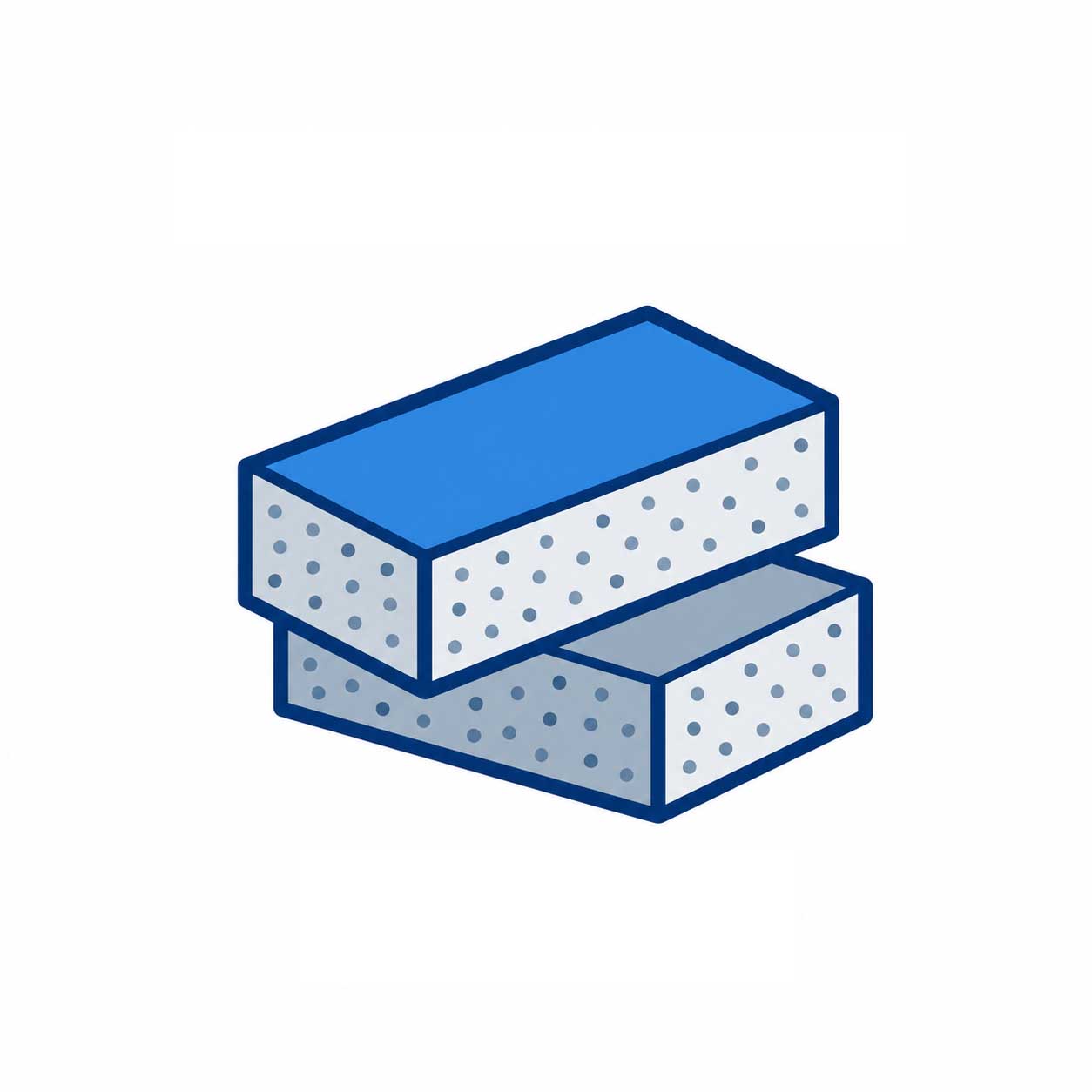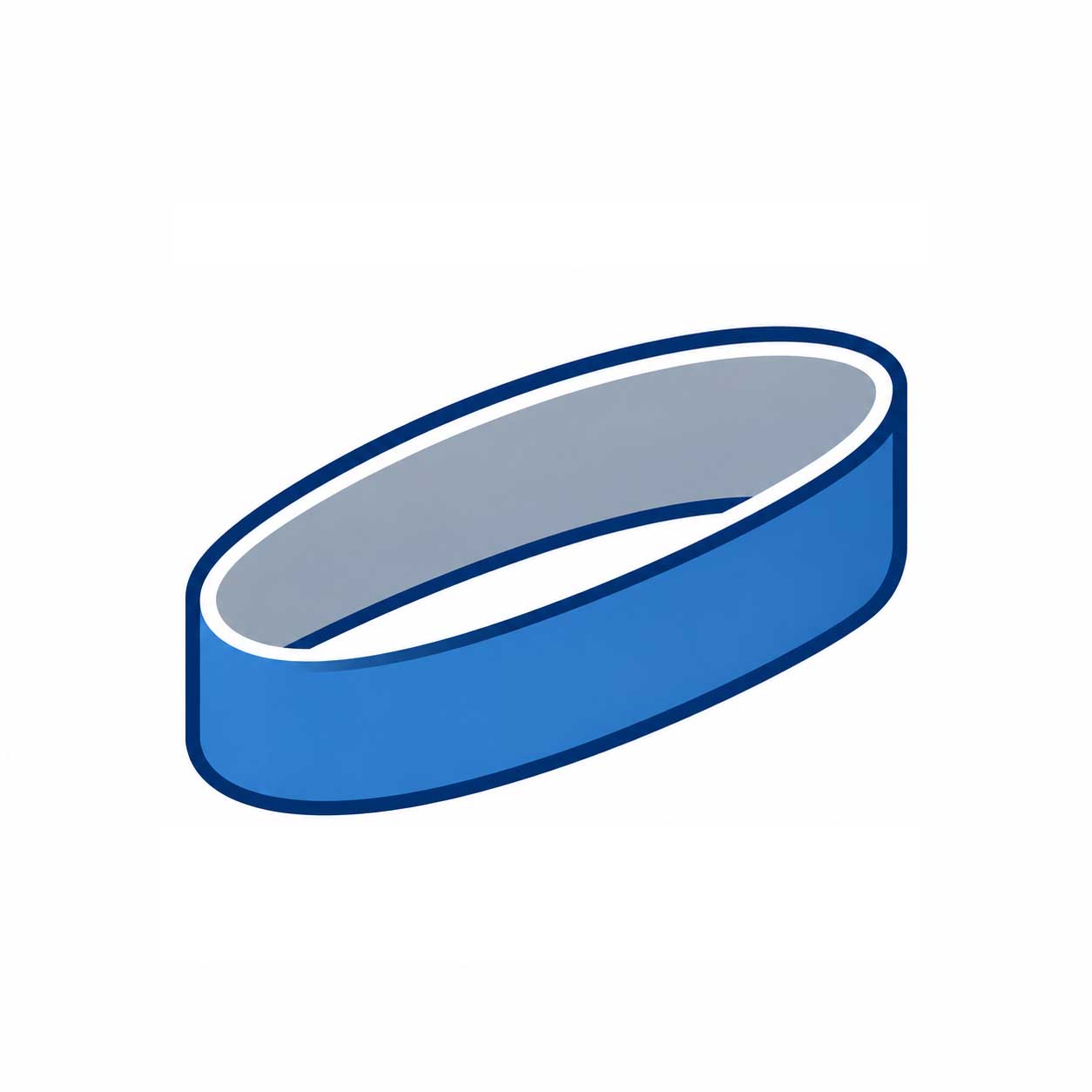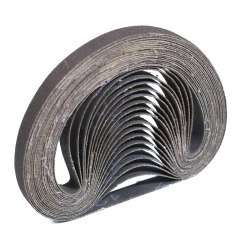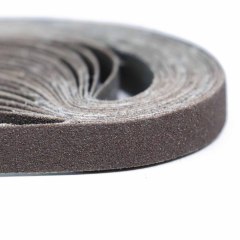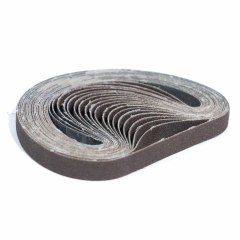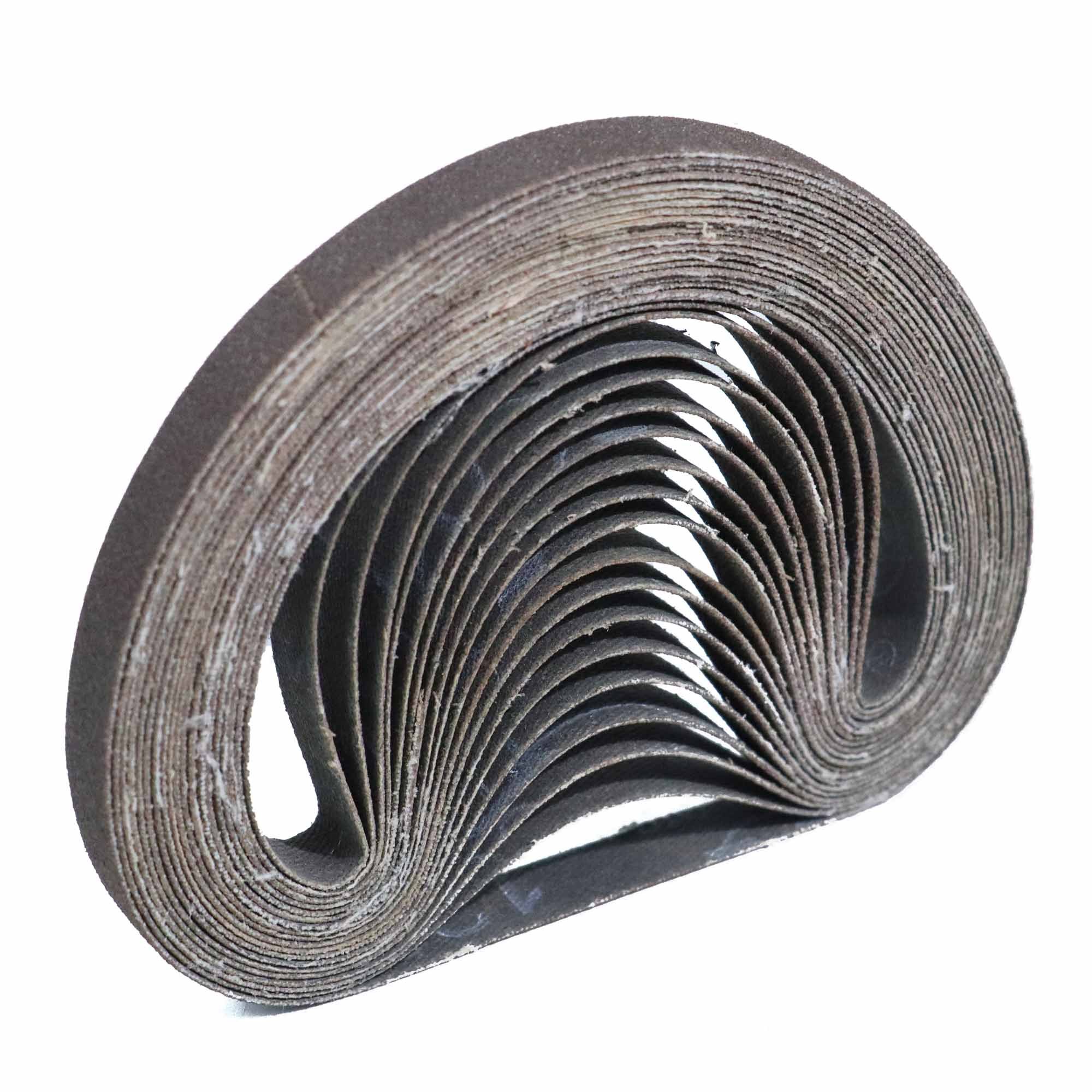
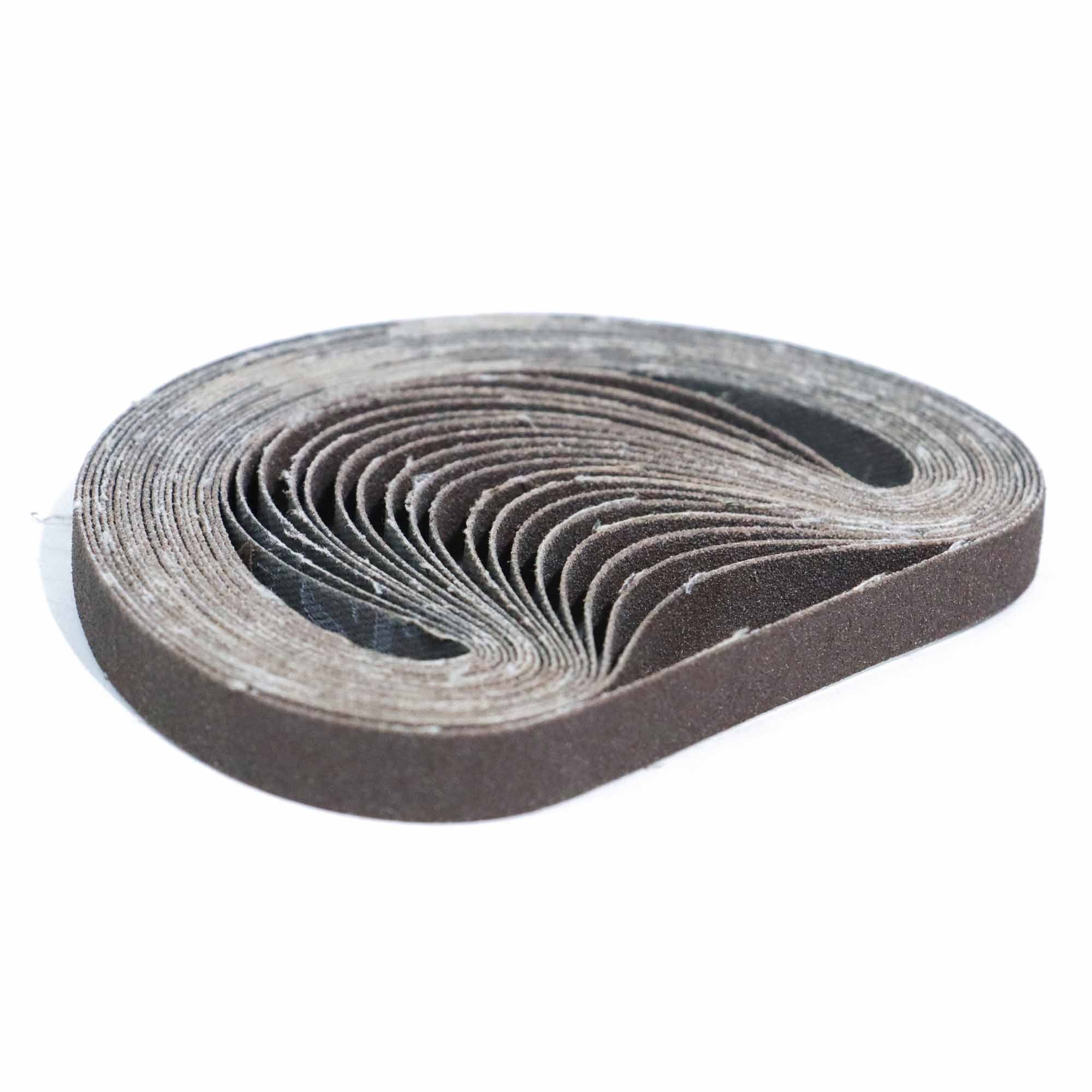
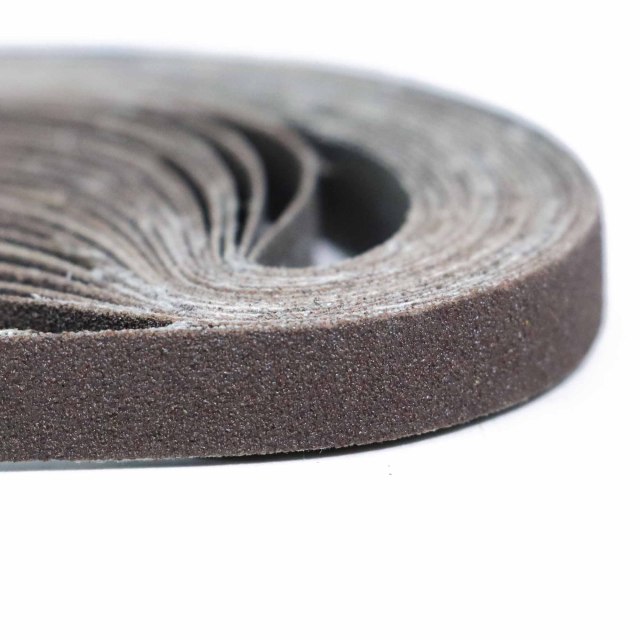
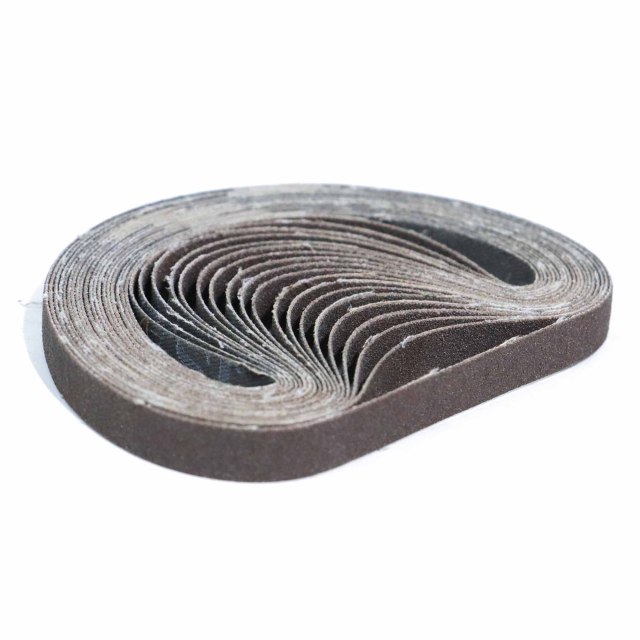
The Aozhong 10 × 350 mm Aluminum Oxide Cloth Sanding Belt is an endless abrasive belt for compatible power-file and belt-sanding tools. The specification refers to a 10 mm belt width and a 350 mm closed-loop length.
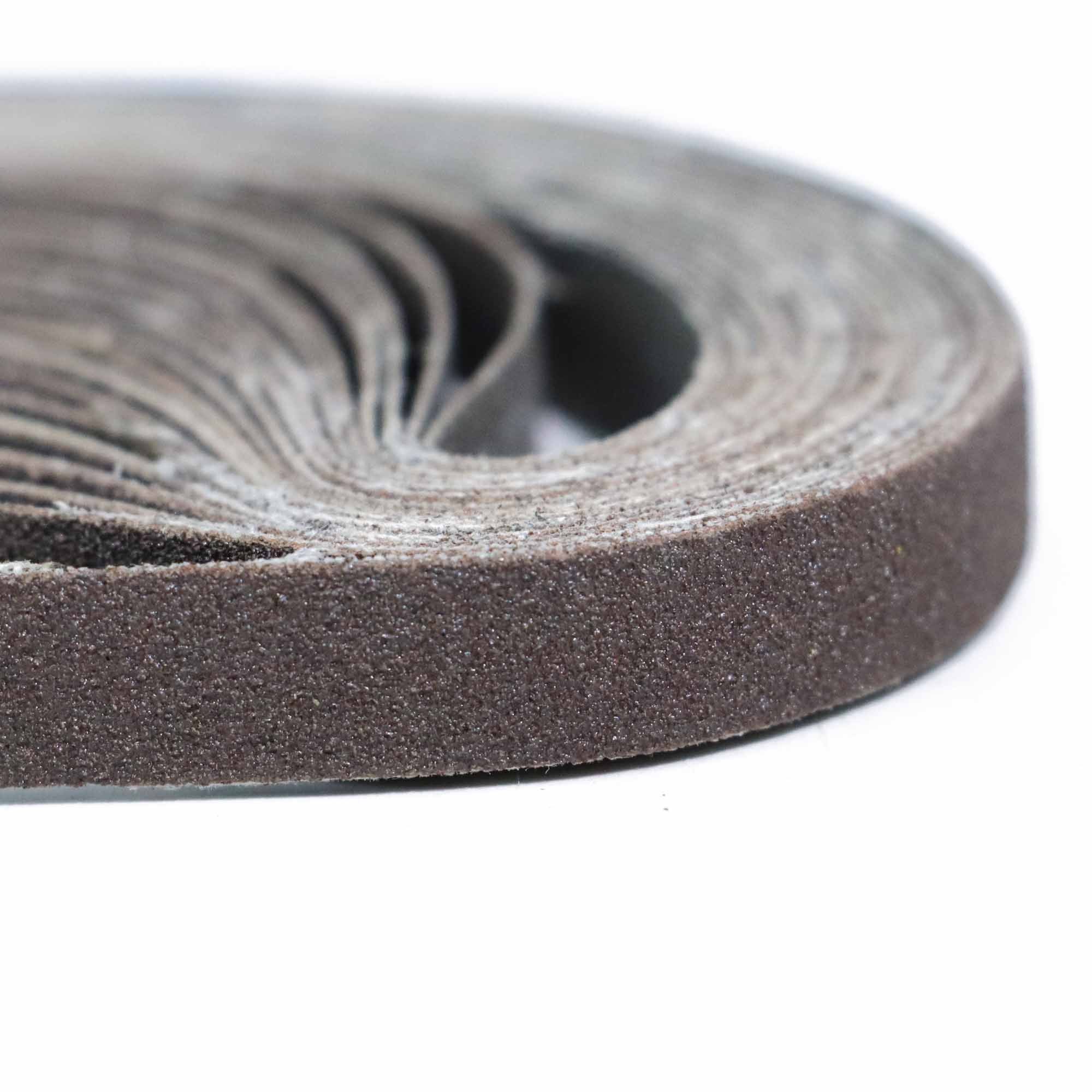
Aluminum oxide grain provides the cutting component, while the cloth backing supports the abrasive coating and carries operating tension. Depending on grit and construction, applications include deburring, edge refinement, coating removal and surface preparation.
Aozhong manufactures the series for distributors and volume users. Grit, abrasive, backing, dimensions, color, logo and material configuration can be customized around the customer’s tool and workpiece.
The 10 × 350 mm format provides a starting specification for replacement-belt purchasing. Tool compatibility must also account for the tensioning system, contact arm and wheel geometry.
The aluminum oxide sanding belt can be configured for material removal and scratch refinement. Grit, coating and backing selection should reflect the workpiece and required finish.
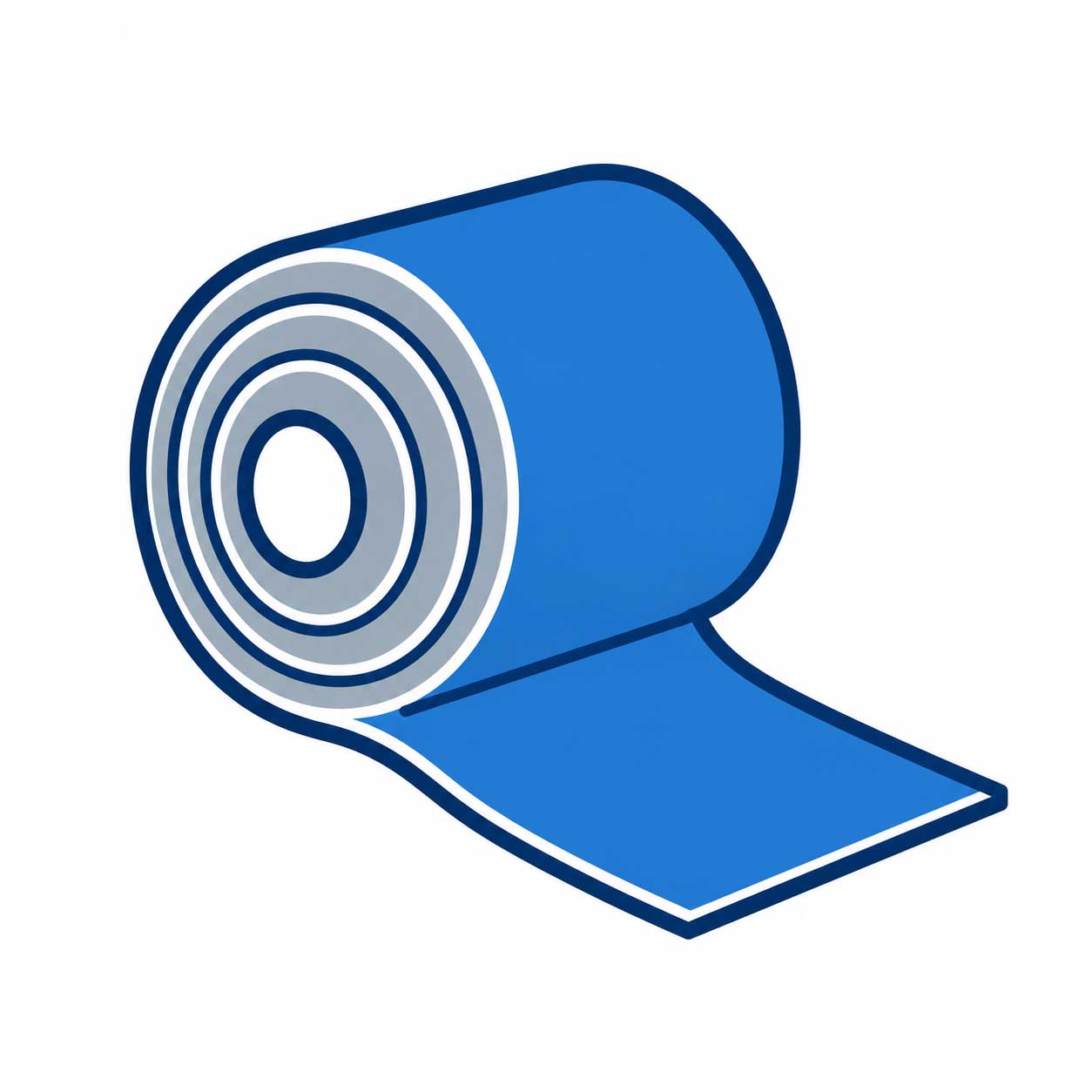
The cloth sanding belt carries tension and bends around the tool’s wheels during operation. Fiber composition, backing grade and finishing treatment affect strength, elongation and conformity.
Construction schematic · Color and joint details follow the approved specification.
The 10 mm width supports work on edges and localized areas where the complete contact arm can reach. Access depends on the tool assembly as well as belt width.
The closed-loop construction provides continuous abrasive movement on a matching tool. Joint condition, tracking and contact support affect the sanding result.
Replacement belts can be organized by dimensions and grit. This supports single-grit replenishment and grit-assortment programs for distributors and production users.
| Application | Typical Tasks | Selection Requirement |
|---|---|---|
| Metal components | Burr removal, edge refinement and surface preparation | Confirm material, removal allowance and heat response |
| Weld-area finishing | Local weld refinement and blending | Match abrasive, grit and tool capacity to the task |
| Coating removal | Local paint or coating treatment | Protect the substrate and control removal |
| Woodworking | Small-part shaping, edge work and repair sanding | Evaluate loading and surface requirements |
| Resin and plastic parts | Local correction and finishing preparation | Control pressure, heat and dimensional change |
Select a metal sanding belt according to the alloy and operation. A deburring belt configuration may differ from one used for scratch refinement.
For a wood sanding belt application, evaluate loading on the intended timber, coating or adhesive residue.
This narrow sanding belt is not a universal substitute for every material-removal or polishing process.
Aozhong supports grit and abrasive configuration around the customer’s material and processing stage. Changing the abrasive mineral requires corresponding product identification.
Backing material can be specified according to tension, bending and contact requirements. Confirm the cloth fiber, grade and thickness before approving production.
Width and closed-loop length can be customized. Purchase specifications should include dimensional tolerances and the belt-length measurement method.
Color and logo customization support distributor ranges. Grit, dimensions, running direction and batch information should be defined where required.
For buyers seeking an OEM sanding belt manufacturer, Aozhong offers configuration around agreed materials, dimensions and branding.
Wholesale sanding belts and private label sanding belts should be supplied against a specification and reference sample, with grit and pack quantity identified separately.
Aozhong manufactures abrasive products for distributors and volume users. Customization includes grit, abrasive, backing, dimensions, color, logo and material configuration.
Provide the machine model, specified belt dimensions, operating speed, contact-arm details and tensioning requirements. Verify installation, tracking and sanding performance with a sample.
Provide the workpiece material, removal task, current grit sequence and required finish. Confirm the selected grit through a workpiece test rather than judging it from belt color or photographs.
Check fit, tracking, joint contact, cutting rate, scratch pattern, loading and wear on the intended tool. Record the operating conditions so subsequent comparisons use the same method.
Approve a specification and reference sample covering abrasive, grit, backing, dimensions, joint, identification and packaging. Agree on acceptance criteria and retain the associated order and batch records.