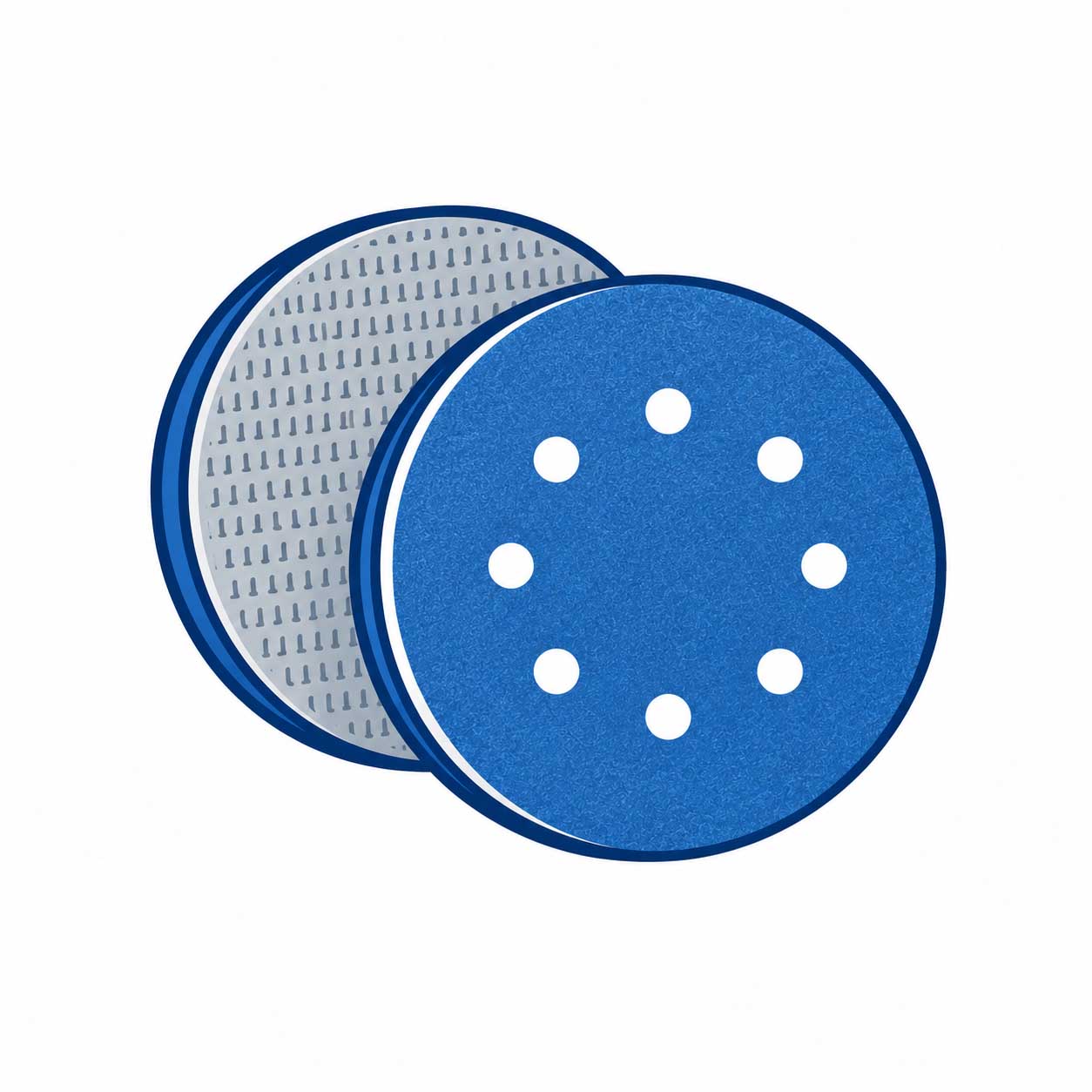
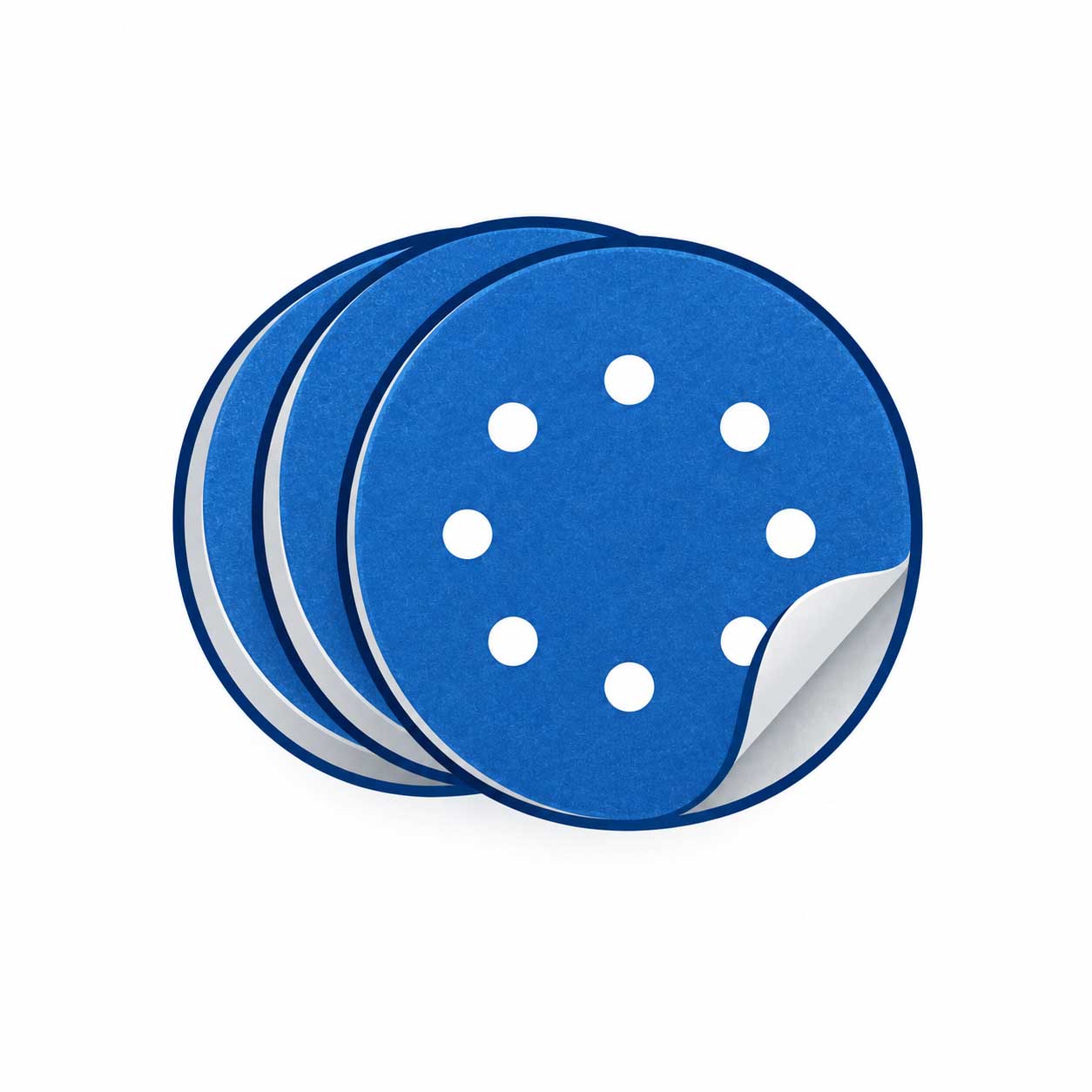
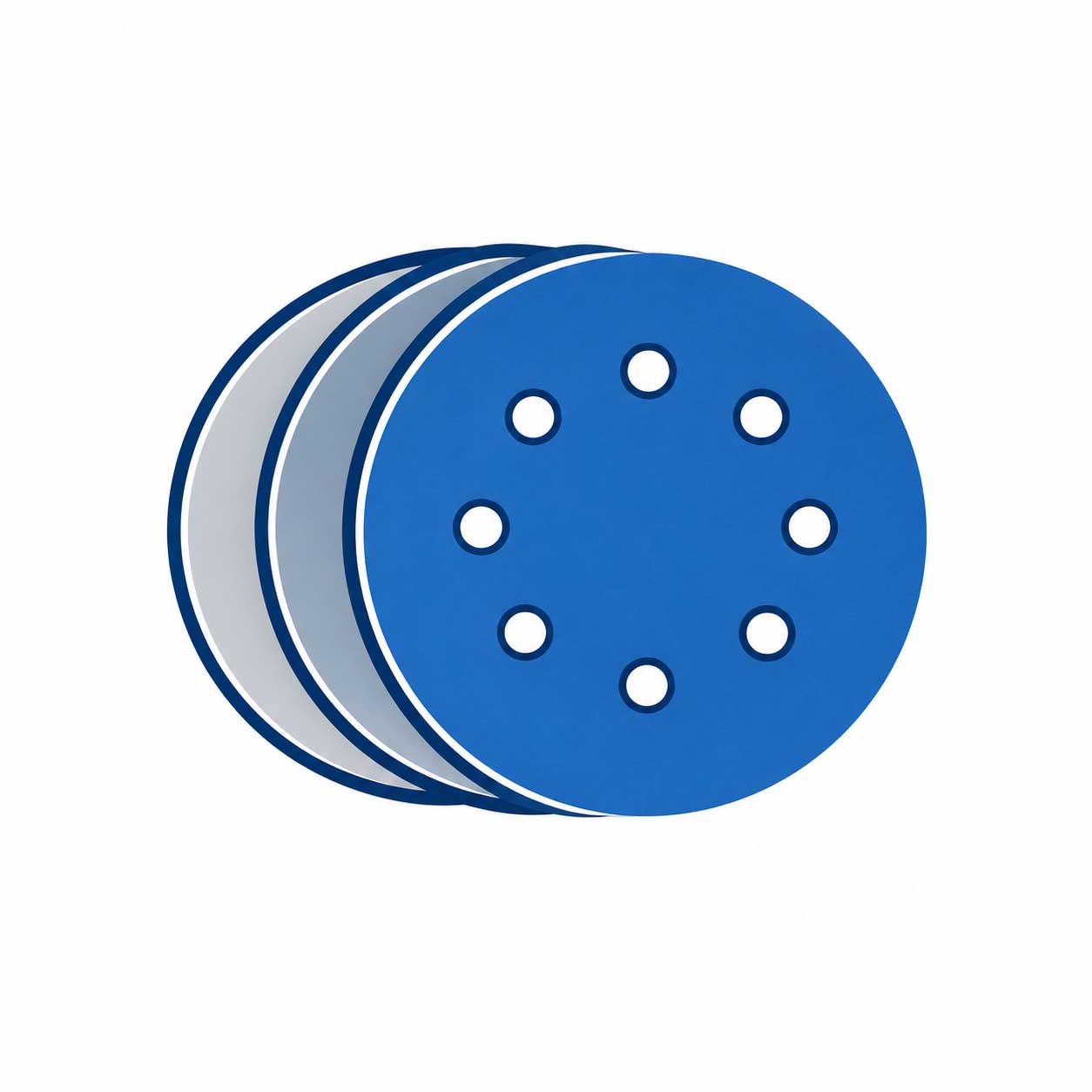
6-inch custom-perforated purple ceramic-coated polyester sanding disc is specifically designed for industrial sanding applications. It features ceramic abrasive grains bonded to a polyester film backing, along with a resin bonding layer and custom perforations for dust extraction.

The 6 inch Purple Ceramic Polyester Metal Sanding Disc 120 Grit 21 Hole uses ceramic abrasive grain, resin bonding, polyester film backing, a hook and loop attachment layer, and a 21-hole dust extraction pattern.
The disc is designed for metal sanding, coating removal, oxidation removal, scratch refinement, weld-area blending, and surface preparation before primer or coating application. The 150 mm disc fits random orbital sanders and DA sanders equipped with a compatible hook and loop backing pad.
Buyers should confirm the hole drawing before ordering because 21-hole backing pads may use different hole positions.
Designed for material removal, coating preparation, and controlled sanding performance with ceramic abrasive technology.
Ceramic grain forms cutting edges as the abrasive works under sanding pressure. This supports material removal during metal surface preparation and coating removal.
Cutting rate and service life depend on ceramic content, sanding pressure, machine orbit, tool speed, work material and dust extraction.Polyester film backing provides dimensional support during orbital sanding. Compared with paper backing, film backing resists edge tearing and maintains contact across the sanding area.
P120 is used between stock-removal and surface-refinement stages. It can follow P80 to reduce sanding marks before moving to P180 or P240 depending on the coating system.
The 21-hole layout supports dust transfer when the sanding disc, backing pad and extraction channel are aligned.
Hole count alone does not confirm compatibility. A hole drawing should confirm disc diameter, center-hole diameter, extraction-hole diameter, hole spacing and position tolerance.Hook and loop backing allows disc installation and removal without adhesive and supports grit changes during multistep sanding.
Suitable for metal preparation, coating removal, repair sanding and industrial surface treatment.
| Application | Typical Use Case | Process Notes |
|---|---|---|
| Paint and Coating Removal | Removal of paint layers and coatings from metal surfaces. | Suitable for controlled coating removal before further surface preparation. |
| Oxidation and Surface-Rust Removal | Removes oxidation marks and surface rust during metal preparation. | Not intended for heavy corrosion removal or deep rust scaling. |
| Scratch Refinement After P80 Sanding | Refines sanding marks left by coarse P80 abrasives. | Supports transition between stock removal and surface refinement stages. |
| Metal Surface Preparation Before Primer | Prepares carbon steel, stainless steel and aluminum surfaces before coating. | Surface condition should be evaluated before primer application. |
| Powder Coating Preparation | Surface preparation before powder coating processes. | Helps improve surface condition for subsequent coating operations. |
| Weld-Area Blending | Blending and refinement around welded areas. | Not intended for heavy weld grinding or aggressive material removal. |
| Filler-Edge Sanding | Sanding filler edges during body repair operations. | Suitable for refinement after initial shaping stages. |
| Automotive Panel Repair | Repair sanding on automotive panels and metal surfaces. | Commonly used for preparation before primer and coating. |
| Industrial Equipment Maintenance | Surface preparation and coating maintenance on industrial equipment. | Application depends on material type and surface condition. |
| Metal Cabinet and Enclosure Preparation | Sanding and preparation of metal cabinets, housings and enclosures. | Suitable for surface refinement before painting or finishing. |
| Carbon-Steel Sanding | Surface preparation and refinement on carbon steel components. | Select grit according to material removal requirements. |
| Stainless-Steel Sanding | Surface preparation and finishing support for stainless steel. | Control pressure to reduce heat generation and surface marking. |
| Aluminum Surface Preparation | Preparation of aluminum parts before coating or finishing. | Use suitable pressure and speed to avoid excessive heat buildup. |
P120 is not intended as the main abrasive for heavy weld grinding, thick scale removal, deep burr removal or final paint sanding.
We manufacture coated abrasive discs for importers, distributors, automotive refinishing suppliers, metalworking suppliers and private-label programs.
| Production Control | Inspection and Management Support |
|---|---|
| Abrasive Grain Incoming Inspection | Inspection of abrasive grain materials before production to support consistent sanding performance. |
| Polyester Film Backing Inspection | Checking film backing quality, stability and suitability for coated abrasive disc production. |
| Resin Coating Control | Resin coating process control to support abrasive grain bonding and product consistency. |
| Coating-Weight Monitoring | Monitoring coating weight during production to maintain abrasive structure requirements. |
| Curing-Process Control | Controlled curing process to support bonding strength and abrasive durability. |
| Lamination Inspection | Inspection of lamination quality for backing attachment and product stability. |
| Disc-Diameter Inspection | Checking disc dimensions according to approved product specifications. |
| Hole-Position Inspection | Inspection of hole position and layout according to backing-pad requirements. |
| Hook and Loop Attachment Checks | Verification of attachment performance and compatibility with sanding pads. |
| Grit and Label Verification | Checking grit identification, product labels and packaging information. |
| Batch Identification | Batch marking and production traceability management. |
| Packaging Inspection | Inspection of packaging quantity, labeling and shipment preparation. |
| Sample Retention | Retained samples for production reference and repeat-order comparison. |
Grit range selection
Hole-pattern development
Buyer-supplied hole drawings
Backing color selection
Printed backing
Box and label design
Barcode application
Mixed-grit packaging
Sample orders
Production batches
Export carton configuration
Product specifications, test methods, tolerances, packaging and acceptance criteria can be documented before production.
We manufacture coated abrasive products and supply sanding discs for distributor, importer, industrial supply and private-label programs. Manufacturing includes coating, curing, laminating, punching, converting, inspection and packaging processes.
We inspect the hole count, hole diameter, center distance and punching position against the approved drawing. Buyers should provide a backing-pad drawing or sample before production because different 21-hole systems may use different layouts.
Yes. Samples can be prepared for abrasive cutting tests, backing-pad fit checks, hole alignment and packaging review. Production specifications should be confirmed after sample approval.
Raw materials, coating settings, curing conditions, dimensions, hole positions, grit labels and packaging are checked by production batch. Batch identification and retained samples can be included in the agreed quality-control process.
Yes. OEM options include backing print, labels, barcodes, boxes, quantity per pack and export cartons. Artwork, specifications, tolerances and acceptance standards are confirmed before production.