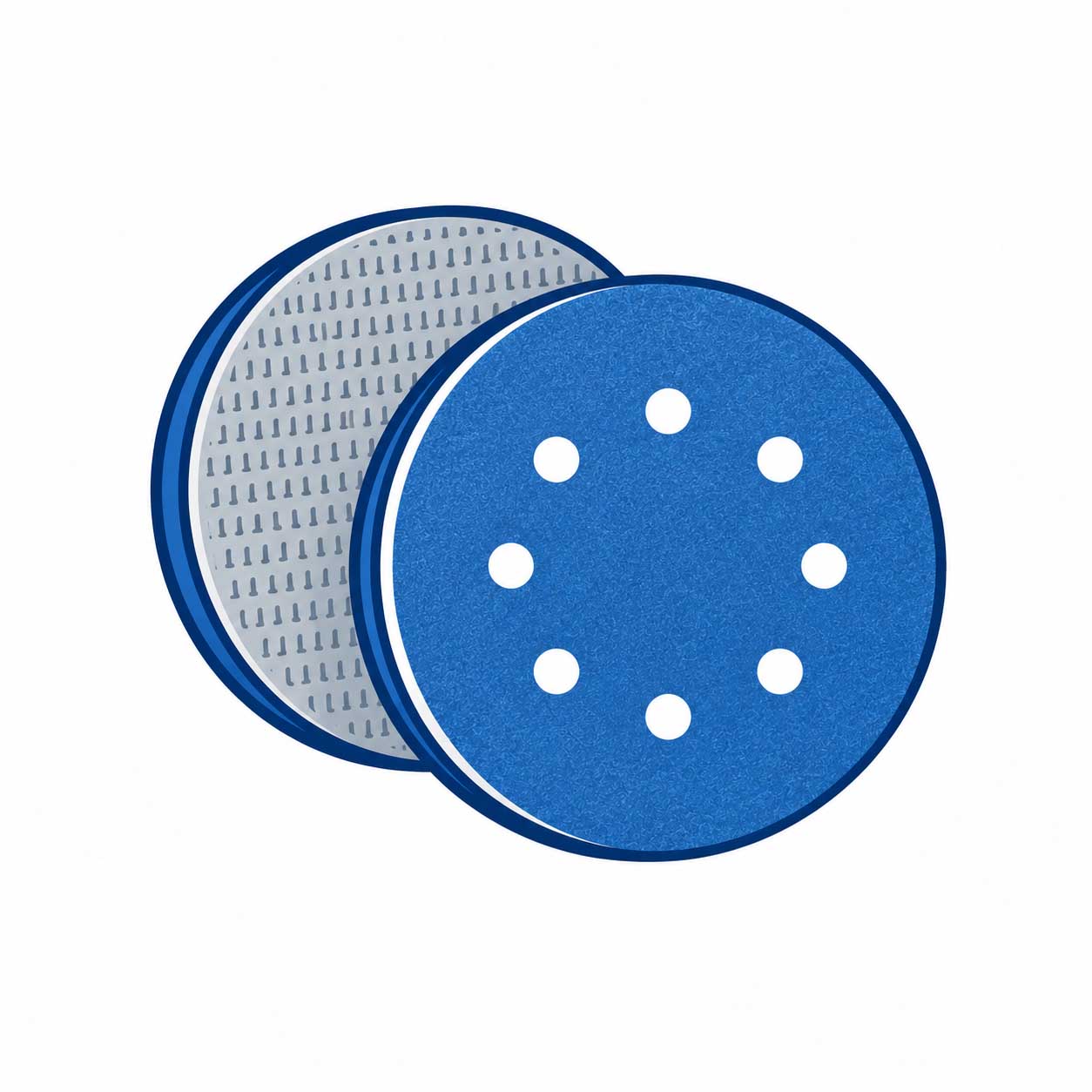
Woodworking sanding is not only about choosing P80, P120, or P180 sandpaper.
Solid wood, MDF, veneer, plywood, and coated wood behave differently during sanding. A sanding method that works well on a solid wood panel may be too aggressive for thin veneer or may create unnecessary dust loading when used on MDF primer.
For woodworking manufacturers and abrasive buyers, the selection should consider four factors:
Material → Sanding Stage → Surface Requirement → Abrasive Format
At Aozhong, different abrasive formats can be combined around these stages, including sanding discs, abrasive belts, mesh sanding discs, sanding sheets, sanding rolls, sanding sponges, and fine finishing abrasives.
The first step is to identify the material.
“Wood sanding” covers several very different substrates.
| Wood Material | Main Sanding Challenge | Abrasive Selection Focus |
|---|---|---|
| Solid Wood | Grain scratches and machining marks | Grit progression + grain direction |
| MDF | Fine dust and edge fibers | Dust control + surface refinement |
| Veneer | Sand-through risk | Fine abrasive + low pressure |
| Plywood | Different grain directions | Controlled sanding |
| Primer / Sealer | Abrasive loading | Fine sanding + dust extraction |
| Painted Wood | Coating removal or refinement | Match grit to coating condition |
This is why a woodworking abrasive should not be selected only by grit number.
For example, P180 may be suitable for final preparation on some solid wood products, but the same P180 disc can still be too aggressive on a thin veneer edge if the operator uses too much pressure.
Solid wood sanding usually starts with removing machining marks and gradually reducing the scratch pattern.
The exact starting grit depends on the surface.
A rough sawn or heavily damaged panel may need a coarse abrasive, while a machined furniture panel may begin much finer.
A general progression can be:
| Wood Sanding Stage | Reference Grit Range | Main Purpose |
|---|---|---|
| Heavy Stock Removal | P40–P60 | Level defects or rough surfaces |
| Initial Sanding | P80 | Remove machining marks |
| General Refinement | P100–P120 | Reduce coarse scratches |
| Fine Wood Preparation | P150–P180 | Prepare for coating |
| Fine Finishing | P180–P240 | Application-dependent finish |
| Sealer / Primer Sanding | P240–P400 | Refine coating surface |
These are general reference ranges rather than fixed rules.
Wood species, stain, coating system, sanding machine, and required finish can change the final grit.
Natural wood has a visible grain structure.
During the final sanding stages, scratches running across the grain may become more visible after stain or transparent coating is applied.
For this reason, final hand sanding should normally follow the wood grain where practical.
A typical workflow might be:
Machine sanding → Surface leveling → Fine sanding → Final hand sanding with the grain
Aozhong Hook & Loop Sanding Discs can be used for machine sanding, while Sanding Sheets, Rolls, and Sanding Sponges can be used for hand finishing, edges, profiles, and smaller areas.
MDF behaves differently from solid wood.
There is no natural wood grain to follow. Instead, the main challenges include:
Large MDF panels can generate significant fine dust during machine sanding.
If this dust remains on the abrasive surface, the sanding disc may load and cutting performance can fall.
For production sanding, dust extraction therefore becomes an important part of the abrasive system.
Aozhong Mesh Sanding Discs use an open structure that allows sanding debris to move through the abrasive when used with a compatible extraction system.
Multi-Hole Sanding Discs use multiple extraction holes to connect the abrasive surface with the backing pad and vacuum system.
Both can be useful for:
The correct choice depends on the sanding machine and backing pad.
Cut MDF edges are usually more porous than the main panel surface.
A typical process may be:
Edge Sanding → Sealer / Primer → Intermediate Sanding → Final Coating
The objective is not to keep sanding the edge until it feels smooth before coating. The edge may also require sealing before the final finish can be achieved.
Veneer sanding requires more control because the decorative wood layer may be thin.
Once the veneer is sanded through, the substrate below becomes visible and the panel may need repair or replacement.
The highest-risk areas are usually:
For veneer sanding:
| Area | Better Sanding Direction | Main Reason |
|---|---|---|
| Large Flat Panel | Fine machine sanding | Efficient surface refinement |
| Panel Edge | Hand sanding | Better pressure control |
| Corner | Sanding sponge / sheet | Reduce sand-through risk |
| Profile | Flexible abrasive | Better surface contact |
| Local Defect | Small controlled abrasive | Limit unnecessary removal |
Not every woodworking operation should use a sanding disc.
The shape of the workpiece and the production equipment also affect abrasive selection.
| Abrasive Product | Best Fit in Woodworking | Main Advantage |
|---|---|---|
| Sanding Disc | Panel and orbital sanding | Fast machine sanding |
| Abrasive Belt | Production sanding and stock removal | Continuous sanding |
| Mesh Sanding Disc | Dust-heavy sanding | Open extraction structure |
| Sanding Sheet | Hand sanding | Simple and flexible |
| Sanding Roll | Custom hand or machine sizes | Flexible converting |
| Sanding Sponge | Curves, profiles and edges | Surface conformity |
| Fine Film / Finishing Abrasive | Coating refinement | Controlled fine sanding |
Useful for furniture panels, cabinet components, MDF, plywood, and general wood preparation.
Useful for:
Useful for:
Suitable for hand sanding, custom block sizes, and production environments where the customer needs to cut abrasive material to specific dimensions.
For B2B buyers, choosing the correct format can be just as important as choosing the grit.
Once wood has been coated with primer, sealer, or another intermediate coating, the sanding objective changes.
The abrasive is no longer mainly cutting wood fibers.
It may need to:
This is where finer abrasives become more useful.
| Coating Sanding Stage | Reference Grit Direction | Main Goal |
|---|---|---|
| Initial Primer Leveling | P180–P240 | Reduce heavier texture |
| General Sealer Sanding | P240–P320 | Refine coating |
| Fine Preparation | P320–P400 | Prepare for next coating |
| Fine Finishing | P400+ | Coating-system dependent |
Always follow the coating manufacturer's technical instructions when deciding the final grit.
Primer and sealer dust can accumulate between abrasive grains.
Possible causes include:
For dust-heavy primer sanding, Aozhong Mesh or Multi-Hole Sanding Discs can be considered.
For finer coating preparation, a more stable fine abrasive structure may be useful where surface consistency becomes more important than aggressive cutting.
Furniture manufacturers, cabinet factories, woodworking distributors, and private-label buyers usually need more than one sanding product.
A practical woodworking range can be built around production stages.
| Woodworking Process | Aozhong Product Direction |
|---|---|
| Heavy Wood Removal | Abrasive Belt / Coarse Sanding Disc |
| General Panel Sanding | Hook & Loop Sanding Disc |
| MDF Dust-Control Sanding | Mesh / Multi-Hole Sanding Disc |
| Fine Wood Preparation | Fine Sanding Disc |
| Primer / Sealer Sanding | Fine Disc / Mesh Abrasive |
| Curves and Profiles | Sanding Sponge |
| Manual Wood Sanding | Sanding Sheets |
| Custom Hand Sanding | Sanding Rolls |
| Edge and Detail Work | Foam / Flexible Abrasive |
For distributors, this product-system approach is more useful than simply stocking every grit in the same abrasive format.
The customer application should determine the product mix.
Yes. Different woodworking materials require different abrasive structures. Aozhong can recommend sanding discs, abrasive belts, sanding sheets, rolls, mesh abrasives, or sanding sponges according to the substrate, grit range, sanding method, and required finish. For example, MDF sanding often requires better dust control, while veneer sanding requires finer abrasives and more controlled pressure.
Yes. Aozhong supports customization of abrasive size, grit range, backing type, hole pattern, shape, attachment system, and packaging. This is useful for woodworking factories that use different orbital sanders, wide-belt machines, sanding blocks, or hand-sanding processes.
Yes. Samples can be provided for qualified B2B buyers to evaluate cutting performance, scratch pattern, loading resistance, flexibility, surface finish, and compatibility with their sanding equipment before placing a bulk order. Testing on the customer’s actual wood, MDF, veneer, or coating system is recommended whenever possible.
Aozhong applies quality control across raw material inspection, abrasive coating, backing and bonding, converting, dimensional checks, and finished-product inspection. For repeat B2B orders, key specifications such as grit, size, hole pattern, backing, attachment, and packaging should be confirmed before production to help maintain batch consistency.
Yes. Aozhong supports OEM and private-label projects for distributors, woodworking suppliers, furniture-industry buyers, and abrasive brands. Custom options can include product dimensions, grit combinations, printed information, labels, packaging, and carton markings. For new programs, it is better to confirm product performance through samples before finalizing the private-label packaging.