Fiberglass and composite materials are used in boats, automotive parts, industrial panels, transportation equipment, sporting goods and molded components.
However, sanding composites is different from sanding solid metal or wood.
The operator may need to remove resin, level a repair area, refine primer, sand gelcoat or prepare a molded surface for coating. At the same time, excessive sanding can expose fibers, damage edges or remove more coating than required.
A practical composite sanding process should therefore consider:
Material → Surface Defect → Sanding Stage → Dust Control → Required Finish
For Aozhong, different abrasive structures can be used at different stages rather than expecting one sanding disc to handle the complete process.
“Composite material” covers several surface structures.
The abrasive should first be selected according to what is actually being sanded.
| Material / Surface | Main Sanding Challenge | Abrasive Selection Focus |
|---|---|---|
|
01 Fiberglass / FRP
|
Fine dust, fiber exposure | Controlled cutting + dust extraction |
|
02 Resin Repair
|
Loading and uneven repair area | Leveling + grit progression |
|
03 Filler
|
Heavy sanding dust | Cutting + extraction |
|
04 Gelcoat
|
Scratch depth and coating removal | Controlled fine sanding |
|
05 Composite Primer
|
Fine dust and loading | Fine abrasive + extraction |
|
06 Carbon-Fiber Composite
|
Fiber/resin surface control | Controlled material removal |
|
07 Molded Curves
|
Uneven abrasive contact | Flexible / foam abrasive |
This creates the first rule:
Do not choose composite abrasives by grit alone.
The same P240 abrasive may behave differently when sanding cured filler, gelcoat, primer or a molded composite surface.
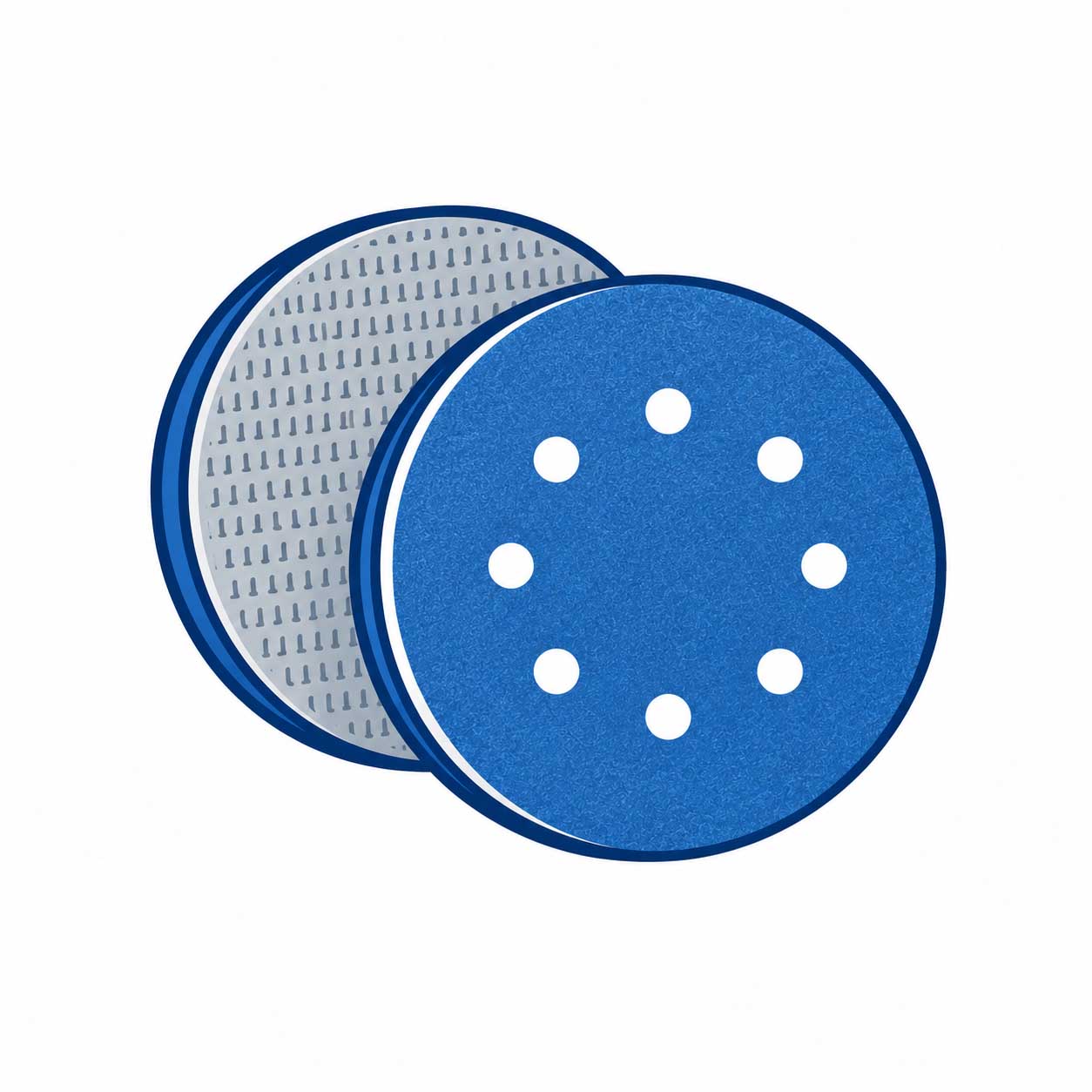
Aozhong's general-purpose aluminum oxide sanding discs are already positioned for applications including composite surface refinement, fiberglass coating preparation and preparation before coating.
Fiberglass repair often involves resin, filler or repaired laminate that sits above the surrounding surface.
The first objective is leveling.
Once the repair area approaches the original surface, the objective changes to scratch refinement.
A general working structure can look like this:
| Sanding Stage | Reference Grit Direction | Main Purpose |
|---|---|---|
|
01 Heavy Repair Leveling
|
P40–P80 | Reduce excess repair material |
|
02 Initial Refinement
|
P80–P120 | Remove coarse scratches |
|
03 Intermediate Refinement
|
P120–P180 | Smooth repair transition |
|
04 Pre-Primer Preparation
|
P180–P240 / P320 | Prepare surface for next coating |
|
05 Primer Refinement
|
P320–P600 | Coating-system dependent |
|
06 Fine Finish Correction
|
P800+ | Gelcoat / coating-dependent finishing |
These are reference ranges rather than fixed rules.
The actual sequence depends on:
The important principle is:
Each sanding stage should remove the scratch pattern from the previous stage.
Jumping directly from aggressive repair sanding to very fine paper may leave deep scratches underneath the refined surface.
Aozhong Hook & Loop Sanding Discs can be used for machine sanding where frequent grit changes are required, while PSA formats can be considered for compatible blocks or processes where one grit stays on the tool longer. Aozhong currently manufactures both attachment systems.
Fiberglass and composite sanding can generate significant fine dust.
NIOSH notes that fiberglass exposure can affect the eyes, skin and lungs, and historical workplace studies have documented large quantities of glass-fiber dust during trimming, cutting and sanding operations.
Dust control therefore has two different purposes:
Process control
Keeping sanding debris away from the abrasive helps reduce loading.
Worker exposure control
The facility also needs appropriate engineering controls, PPE and dust-management procedures for the materials being processed.
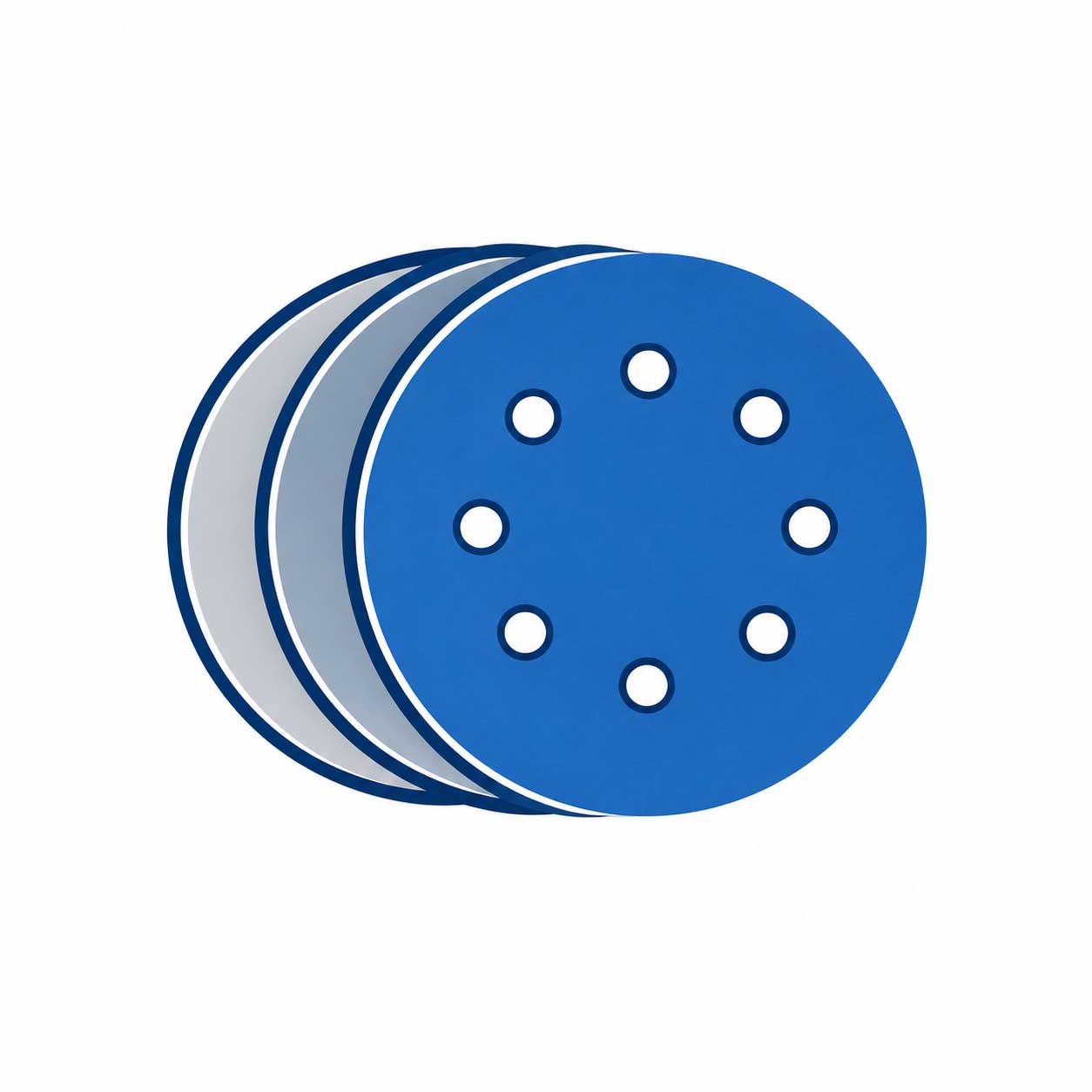
For sanding performance, several abrasive structures are available:
| Abrasive Structure | Dust Path | Typical Composite Direction |
|---|---|---|
|
01 Standard Hole Disc
|
Fixed extraction holes | General sanding |
|
02 Multi-Hole Disc
|
Multiple extraction paths | Resin, filler and primer |
|
03 Mesh Sanding Disc
|
Open mesh structure | High-dust sanding |
|
04 Film Disc with Holes
|
Fixed extraction + stable backing | Surface refinement |
|
05 Hand Sanding Sheet
|
No integrated machine extraction | Local/detail work |
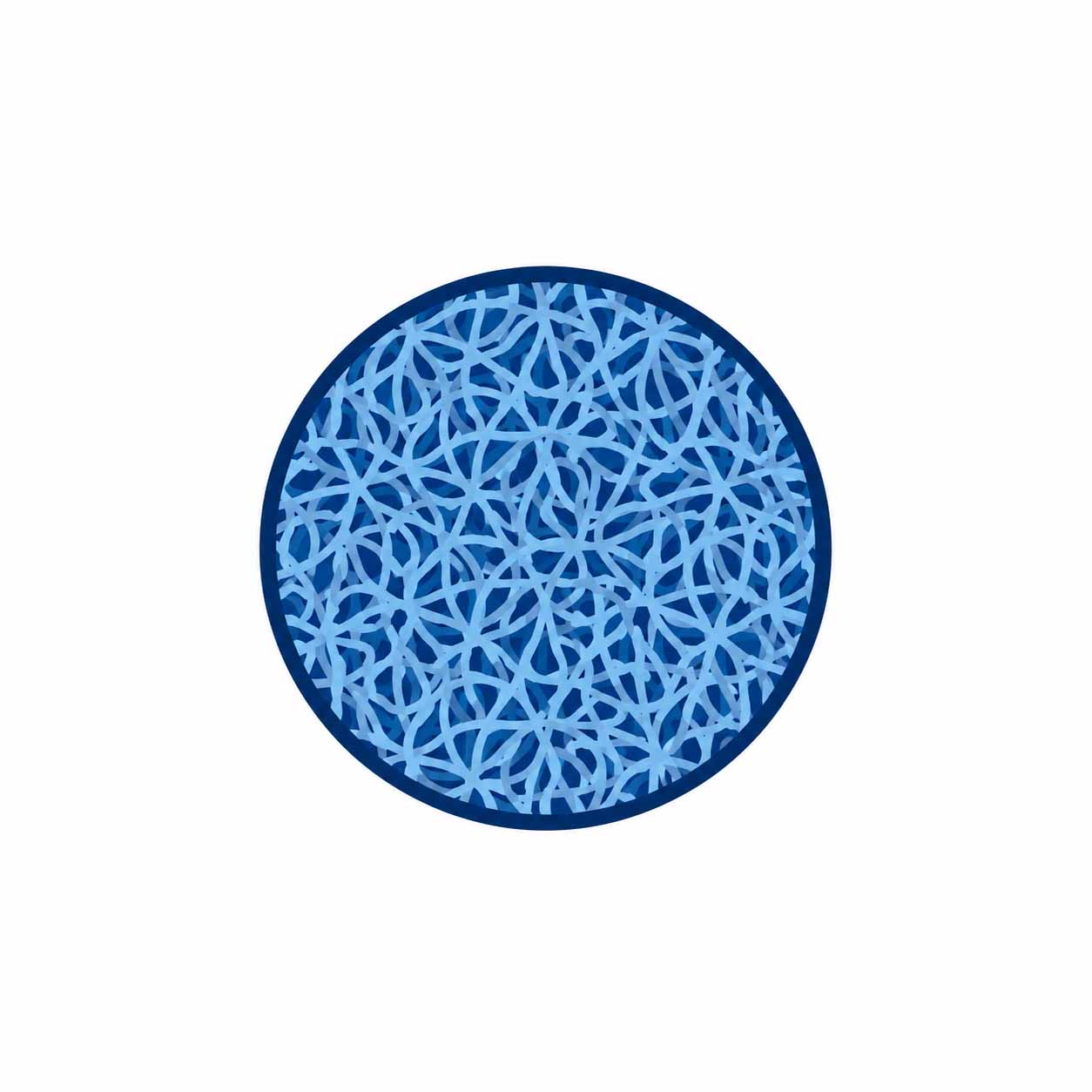
Aozhong Mesh Sanding Discs use fiber or polyester mesh backing with a fully perforated structure designed to support airflow and sanding-dust removal. Available abrasive configurations include aluminum oxide, zirconia and ceramic.
However:
A mesh sanding disc is not a complete dust-control system.
The abrasive, backing pad, sander, extraction hose and collector all need to be compatible.
Composite dust may also present material-specific hazards, so industrial users should ensure their extraction equipment is suitable for the actual dust generated. OSHA has documented cases where composite sanding dust required dust-control equipment appropriate to the hazard.
Gelcoat finishing requires a different approach from heavy fiberglass repair sanding.
The objective may be to correct:
Because gelcoat is a surface layer, unnecessary aggressive sanding removes material that may be difficult to replace.
For a repair, coarse-to-fine sanding may be required. Published marine repair guidance, for example, describes progressing from approximately 220 grit toward 400–600 grit after a cured gelcoat repair before polishing.
For finer surface correction, higher grit ranges may be used depending on defect depth and the finishing system.
| Method | Better Fit | Main Consideration |
|---|---|---|
|
01 Dry Sanding
|
Repair leveling, filler, primer | Fast inspection + extraction |
|
02 Wet Sanding
|
Fine gelcoat refinement | Helps control loose residue |
|
03 Dry Mesh Sanding
|
High-dust preparation | Open extraction structure |
|
04 Fine Film Sanding
|
Scratch refinement | Stable backing |
|
05 Sponge / Foam Sanding
|
Curves and contours | Flexible surface contact |
Aozhong supplies Wet & Dry Sandpaper as well as film-backed and fine sanding products that can be selected according to the finishing process.
Do not assume every PSA, paper or film abrasive is suitable for wet sanding. The complete abrasive construction should be approved for wet use.
Composite components are often molded into complex shapes.
Examples include:
A conventional firm sanding disc works well when the objective is surface leveling.
But the same stiffness can create uneven contact on tight curves.
This is where Foam Sanding Discs and Sanding Sponges become useful.
The foam layer helps distribute pressure and follow the geometry of the component.
A simple rule is:
Firm abrasive = surface leveling
Flexible abrasive = contour following
| Workpiece Area | Main Requirement | Product Direction |
|---|---|---|
|
01 Large Flat Repair
|
Leveling | Sanding Disc / Block |
|
02 Molded Panel
|
Controlled machine sanding | Film / Paper Disc |
|
03 Broad Curve
|
Surface conformity | Foam Sanding Disc |
|
04 Edge
|
Pressure control | Sponge / Hand Abrasive |
|
05 Corner / Recess
|
Access and flexibility | Sanding Sponge |
|
06 Fine Primered Curve
|
Scratch refinement | Fine Foam Abrasive |
A professional composite abrasive system normally requires more than one product.
| Composite Sanding Process | Aozhong Product Direction | Main Function |
|---|---|---|
|
01 Heavy Repair Leveling
|
Coarse Sanding Disc | Material removal |
|
02 General Fiberglass Sanding
|
Hook & Loop Sanding Disc | Surface preparation |
|
03 High-Dust Resin / Filler Sanding
|
Mesh / Multi-Hole Disc | Dust removal support |
|
04 Primer Sanding
|
Mesh / Film Disc | Refinement + dust control |
|
05 Fine Composite Preparation
|
Film Sanding Disc | Scratch control |
|
06 Gelcoat Finishing
|
Wet & Dry / Fine Abrasive | Surface refinement |
|
07 Curves and Molded Parts
|
Foam Disc / Sanding Sponge | Surface conformity |
|
08 Hand Detail Sanding
|
Sanding Sheet / Roll | Local control |
This distinction is important.
A coarse paper sanding disc and a fine film sanding disc are not competing products. They are designed for different stages.
Likewise, Mesh is useful when dust movement and loading control are important, while Film becomes useful when backing stability and controlled scratch refinement are higher priorities.
The best composite sanding system should therefore be designed around the process rather than around one abrasive format.
Fiberglass and composite sanding should be treated as a multi-stage surface preparation process.
Coarse sanding discs can level repair areas. Mesh and Multi-Hole Sanding Discs support dust-heavy resin, filler and primer sanding. Film abrasives provide a stable option for finer scratch refinement. Wet & Dry products can be used in approved fine-finishing processes, while Foam and Sponge Abrasives help follow molded curves and edges.
The practical selection logic is:
Composite Material → Surface Problem → Sanding Stage → Dust Requirement → Final Finish
For manufacturers and B2B abrasive buyers, choosing the right abrasive at each stage is more useful than trying to find one universal sanding disc for every composite application.
Yes. These stages require different abrasive structures. Aozhong can provide conventional sanding discs, Mesh Sanding Discs, Multi-Hole formats, film-backed abrasives, Wet & Dry products and flexible sponge abrasives. Product selection can be based on the substrate, repair stage, grit range, dust-extraction requirement and final finish.
Yes. Aozhong supports no-hole, standard-hole, multi-hole and custom hole-pattern converting on applicable sanding-disc products. Buyers should provide the backing-pad specification or drawing so the hole pattern can be matched to the sanding equipment.
Yes. Aozhong provides samples for evaluation. Buyers can test cutting performance, scratch pattern, clogging, backing adhesion, dust extraction, pad compatibility and surface finish before confirming production specifications.
Yes. Aozhong supports OEM and private-label programs for distributors, wholesalers and industrial buyers. Depending on the product, custom options can include diameter, grit, backing, hole pattern, labels, barcode, packaging and carton marking.
Aozhong's manufacturing and converting processes include raw-material and abrasive checks, backing and attachment inspection, dimensional and hole-position checks, grit identification and finished-product inspection. For repeat B2B programs, specifications can be confirmed during sample approval and carried into batch-production controls.