Automotive refinishing uses different abrasive systems for body filler shaping, featheredge sanding, primer preparation, old paint removal, and surface preparation before coating.
At Aozhong, one question that often comes up when discussing automotive abrasive supply is:
When should an auto body shop use PSA sanding discs instead of hook and loop sanding discs?
PSA is not simply another way to attach sandpaper. The attachment method affects how the abrasive sits on the sanding pad, how often it can be changed, and whether the disc can be removed and used again later.
For distributors, auto body repair suppliers, and industrial buyers, understanding where PSA sanding discs fit into the sanding process helps avoid product mismatch.
PSA stands for Pressure-Sensitive Adhesive.
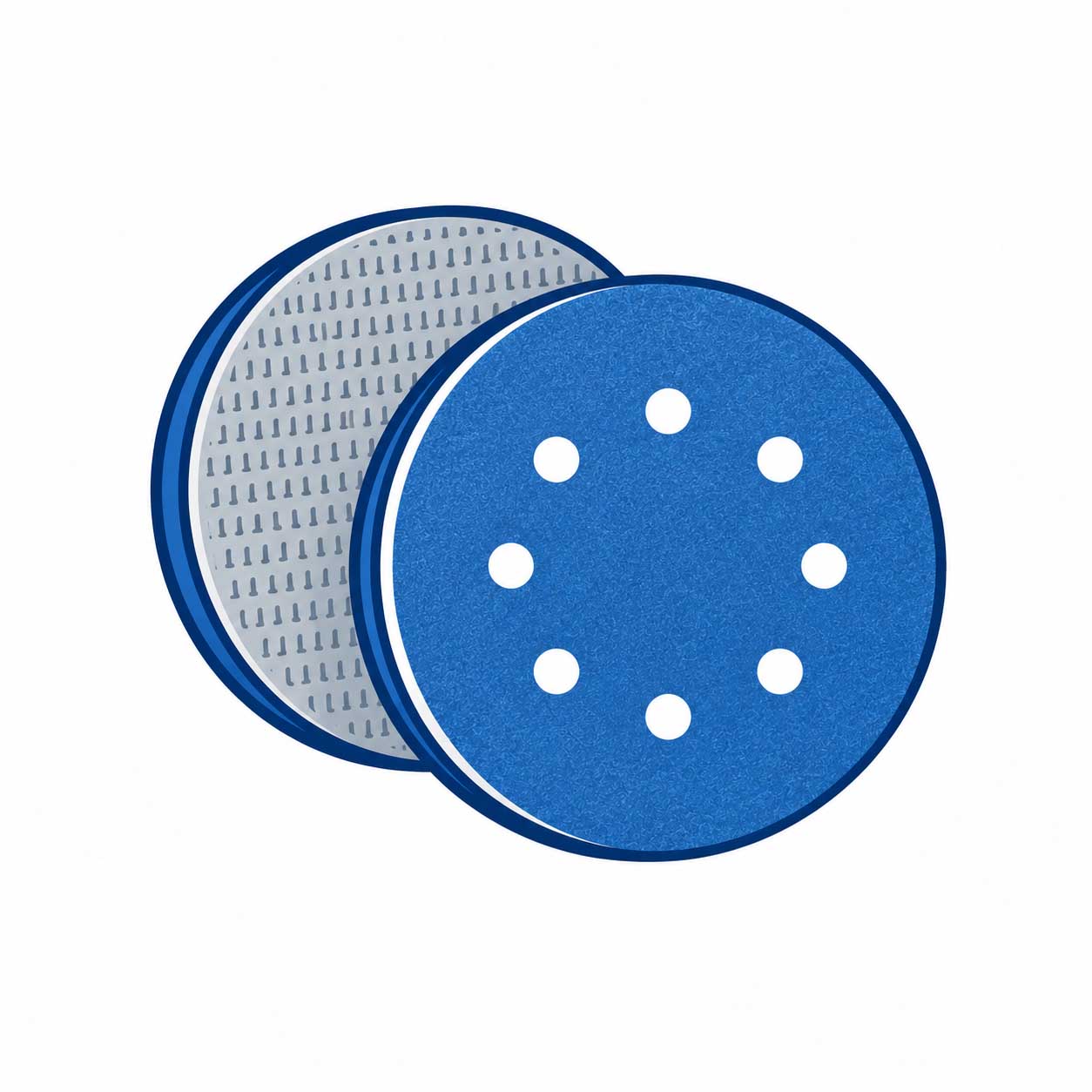
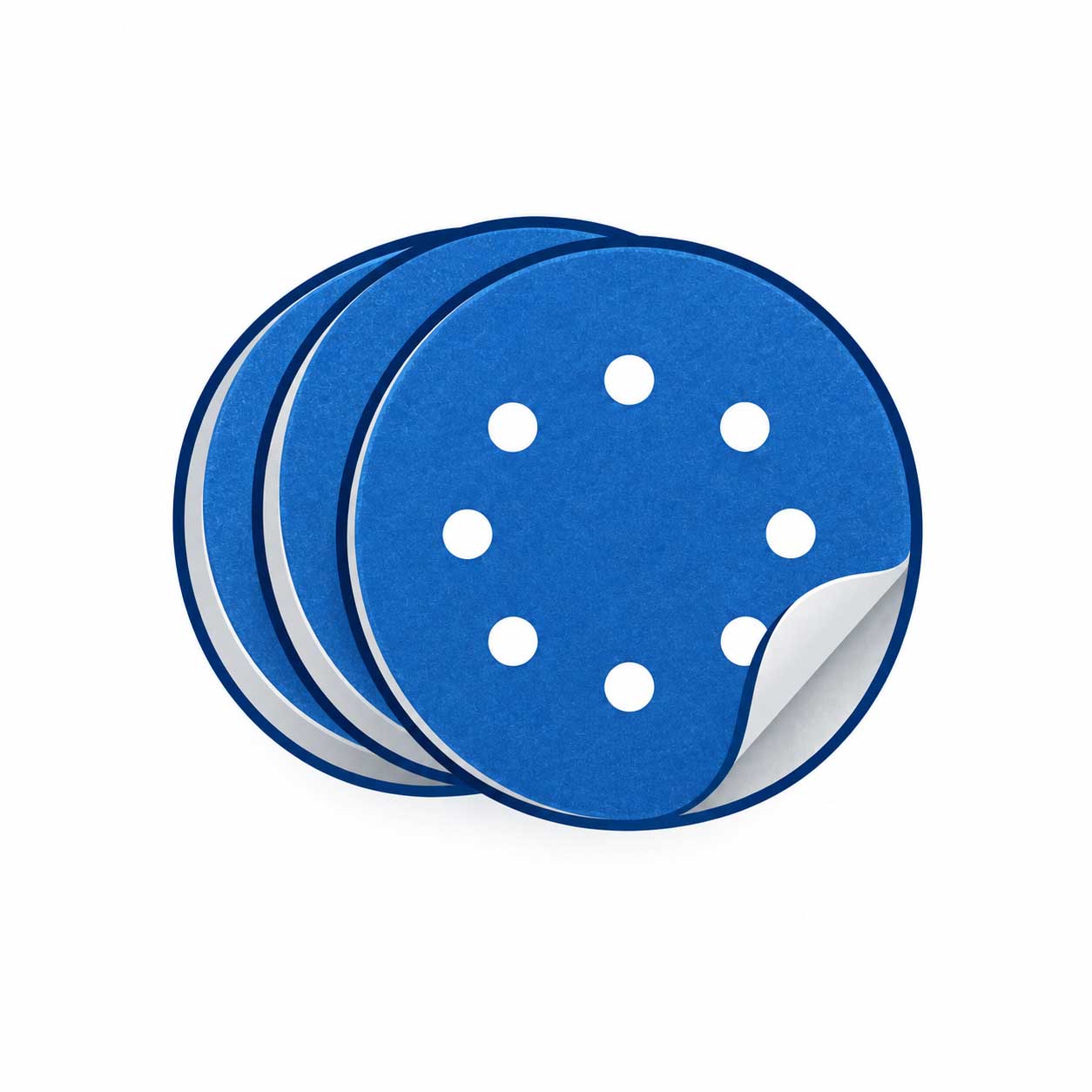
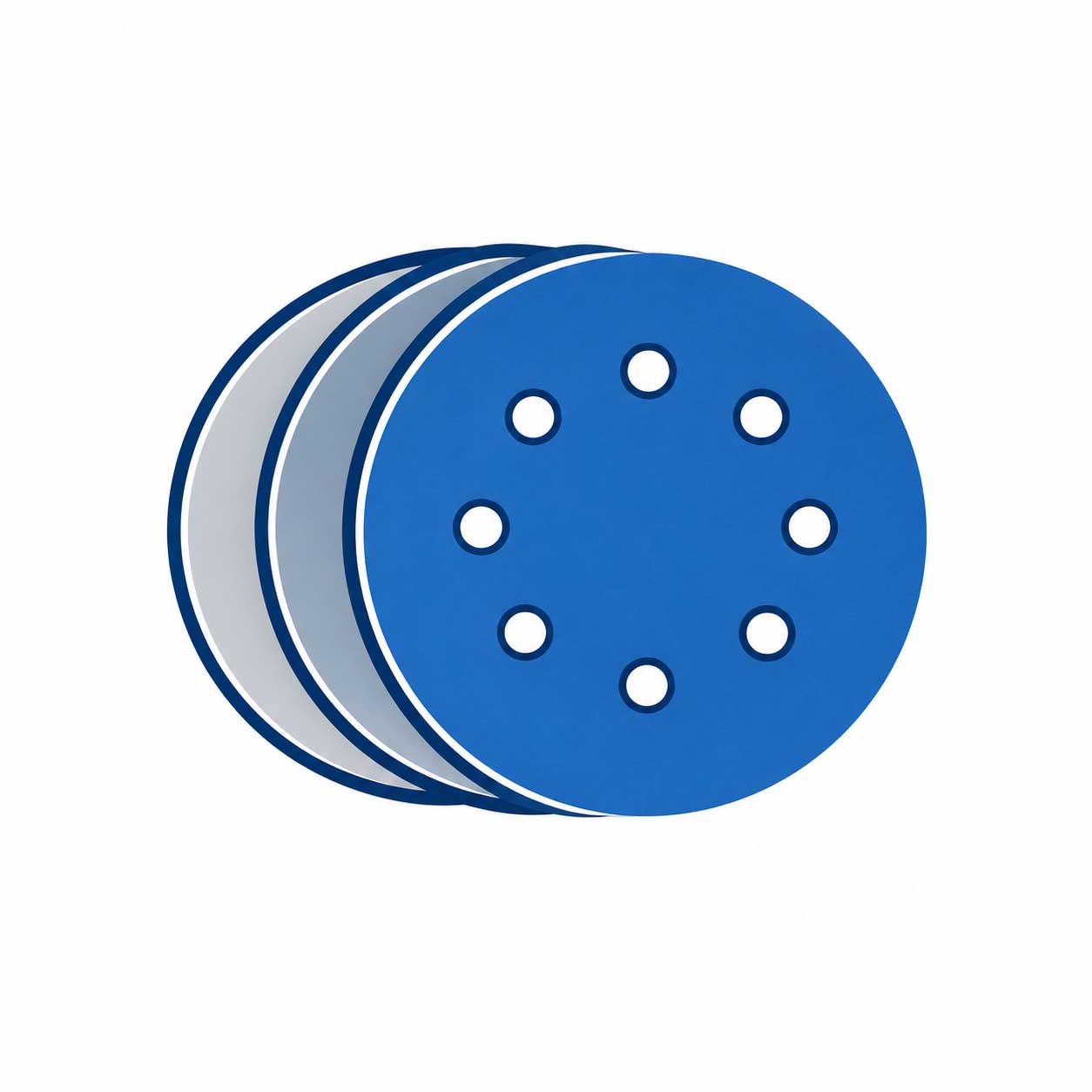
A PSA sanding disc has an adhesive layer on the back. The operator removes the release liner and presses the disc directly onto a compatible sanding pad, block, or sanding tool.
No additional glue is required.
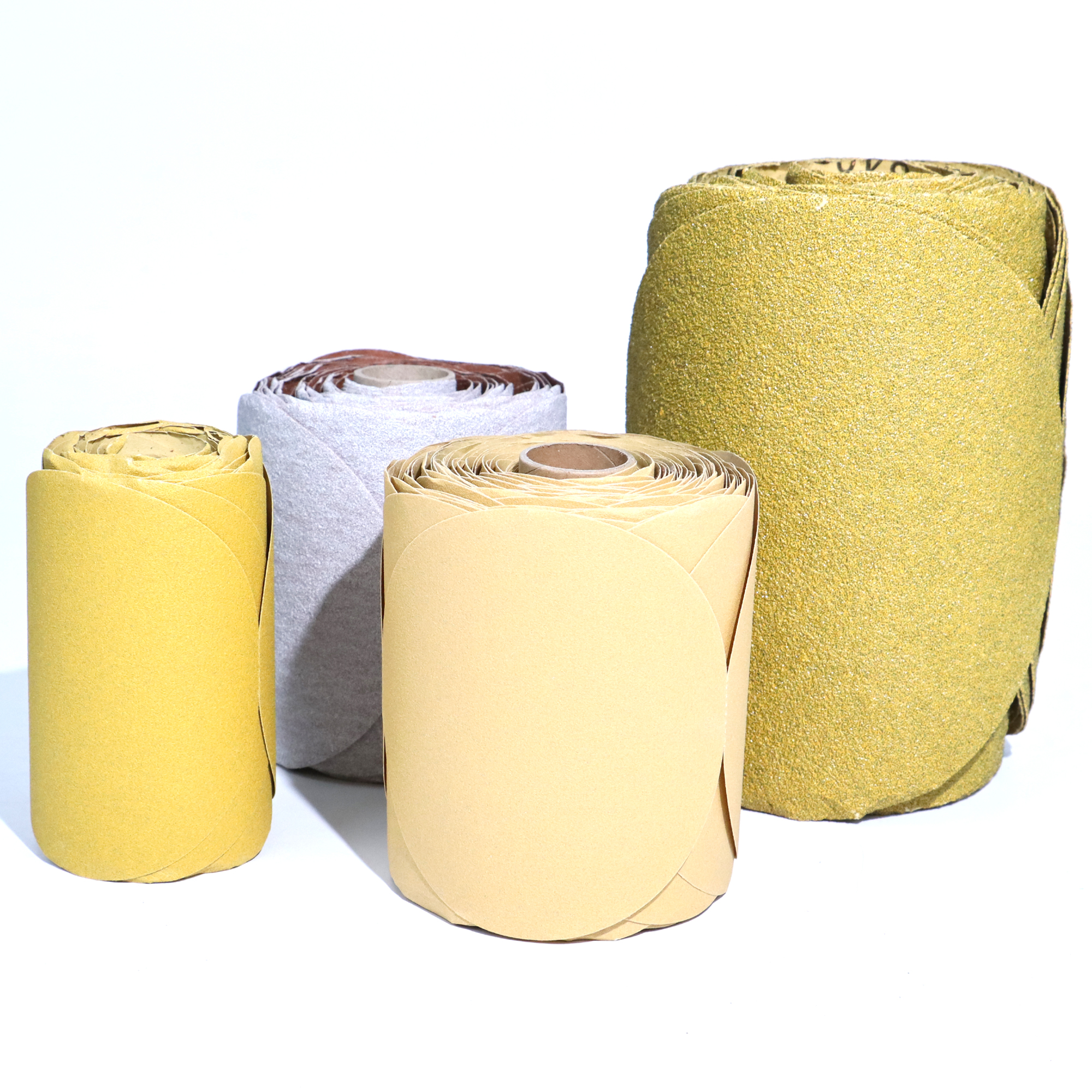
Common PSA abrasive formats include:
The main characteristic of PSA is direct adhesive attachment.
Once installed, the abrasive stays in position until the sanding stage is finished or the abrasive has reached the end of its useful life.
PSA products make sense when the technician wants to use one grit for a longer sanding stage.
In automotive refinishing, this can include several applications.
Body filler needs enough cutting action to establish panel shape.
P60 or P80 may be used during the initial shaping stage before progressing to finer grits.
A PSA sanding disc or PSA abrasive strip can remain attached to the sanding pad or block while the technician works through that stage.
Doors, hoods, roofs, quarter panels, and other broad body panels often require block sanding.
This is where PSA sanding strips are useful.
The adhesive backing keeps the abrasive attached to the sanding block or file board, allowing the technician to focus on:
Loose sandpaper can move or fold during block sanding, while PSA stays attached to the tool surface.
Primer surfacer may also be sanded with PSA abrasives.
For example, a shop may use P320 or P400 for a full primer-leveling stage before changing to the next grit.
If the shop normally keeps one grit installed until the stage is complete, PSA can work well.
If technicians change grits frequently, Hook and Loop may be easier.
Stable existing paint may only need surface preparation before repainting.
Depending on the paint system, PSA sanding discs can be used to create a suitable scratch profile before primer, sealer, or basecoat.
The final grit should still follow the technical data sheet of the coating system.
There is no universal winner.
The main difference is workflow.
| Comparison | PSA Sanding Disc | Hook and Loop Sanding Disc |
|---|---|---|
| Attachment | Pressure-sensitive adhesive | Hook and loop backing |
| Disc Change | Peel off and replace | Pull off and replace |
| Reuse After Removal | Limited | Often possible |
| Frequent Grit Changes | Less convenient | More convenient |
| Pad Type | Smooth PSA-compatible pad | Hook backing pad |
| Main Workflow | Longer single-grit stages | Multi-grit sanding |
| Automotive Use | Block sanding, filler work, repeated sanding stages | Primer prep, DA sanding, multi-stage refinishing |
| Main Limitation | Adhesive loses usefulness after removal | Hook surface can wear or become contaminated |
Use PSA when:
Use Hook and Loop when:
Many automotive shops use both systems.
PSA describes the attachment system. It does not determine grit.
The grit should match the sanding stage.
| Automotive Stage | Common Grit Range | PSA Suitability |
|---|---|---|
| Heavy Paint Removal | P40–P80 | Suitable |
| Body Filler Shaping | P60–P80 | Suitable |
| Filler Refinement | P120–P180 | Suitable |
| Featheredge Sanding | P180–P240 | Suitable |
| Before Primer | P240–P320 | Suitable |
| Primer Leveling | P320–P400 | Suitable |
| Final Primer Preparation | P400–P600 | Depends on workflow |
| Clear Coat Correction | P1500+ | Requires a product designed for the process |
These ranges should be treated as working references.
Paint chemistry, primer build, substrate, coating thickness, repair method, and the coating manufacturer's TDS can change the required grit.
PSA is an attachment method, not a backing material.
The abrasive itself may still use paper, film, or cloth backing. The reference material specifically distinguishes paper-backed and cloth-backed PSA abrasives according to sanding load and tear resistance.
Paper-backed PSA abrasives are suitable for general automotive sanding.
Applications can include:
Film backing provides a more stable base than conventional paper.
It can be useful when the sanding process needs more control over the scratch pattern.
Applications may include:
Cloth backing is used where the abrasive needs more tear resistance and flex strength.
It can be useful for:
For general auto body paint preparation, cloth is not automatically the best option. The backing should follow the sanding stage.
PSA does not suit every automotive sanding process.
Suppose the repair requires:
P80 → P120 → P180 → P240 → P320
If technicians remove every PSA disc before the abrasive is worn, material waste may increase.
Hook and Loop may be more practical.
Some repair shops use multi-hole sanding discs or mesh abrasives with extraction systems.
In this type of workflow, the attachment system, hole pattern, backing pad, and extraction equipment all need to work together.
A PSA disc with the wrong hole pattern will not solve a dust extraction problem.
Not every PSA adhesive is intended for use with water.
If the process requires wet sanding, buyers need to confirm:
For clear coat correction and finish sanding, dedicated wet and dry sandpaper may be more suitable than a standard PSA disc.
Common questions about PSA sanding discs, automotive sanding stages, grit selection, reuse, wet sanding, and sanding block applications.
PSA means Pressure-Sensitive Adhesive. The abrasive has an adhesive backing that attaches directly to a compatible sanding pad.
Yes. PSA abrasives can be used for body filler sanding, block sanding, primer preparation, existing paint preparation, and other automotive sanding stages.
Not in every application. PSA is suitable when one grit stays on the tool for longer. Hook and Loop is usually better when technicians change grits frequently.
PSA discs are generally not designed for repeated removal and reattachment. Once the adhesive becomes contaminated, the disc may not bond reliably.
P60–P80 can be used for initial shaping, followed by P120–P180 for refinement. P240–P320 may be used before primer depending on the coating system.
Only if the complete abrasive construction and adhesive system are designed for wet use.
Common causes include dust, adhesive contamination, pad incompatibility, poor alignment, and residue on the backing pad.
Yes. PSA strips and sheets are commonly used on compatible sanding blocks and long boards.
PSA sanding discs have a defined role in automotive refinishing.
PSA sanding discs have a defined role in automotive refinishing.
They work well when the abrasive needs to stay attached through a longer sanding stage.
Use PSA when:
Use Hook and Loop when technicians need frequent grit changes or want to reuse partially worn discs.
Backing also matters.
Paper supports general sanding.
Film supports surface control.
Cloth supports applications where tear resistance is required.
And when dust extraction, curved surfaces, or wet sanding becomes the main concern, another abrasive format may be more suitable.
At Aozhong, we treat PSA sandpaper as one part of an automotive abrasive system rather than a replacement for every other sanding product.
For B2B buyers, the more useful question is not:
“Is PSA better than Hook and Loop?”
It is:
“At which stage of my customer's automotive sanding process does PSA provide the best fit?”