Automotive paint repair does not always end after the clear coat is sprayed.
Even in a controlled refinishing environment, the finished surface may contain dust nibs, orange peel, small paint runs, sanding marks, or other minor defects. Some of these defects can be corrected through controlled sanding and polishing.
However, paint correction is different from normal primer sanding.
The objective is not aggressive material removal. The goal is to remove only the defect while keeping as much clear coat as possible.
A practical selection method is:
Identify the Defect → Check Clear-Coat Condition → Level the Defect → Refine the Scratches → Polish
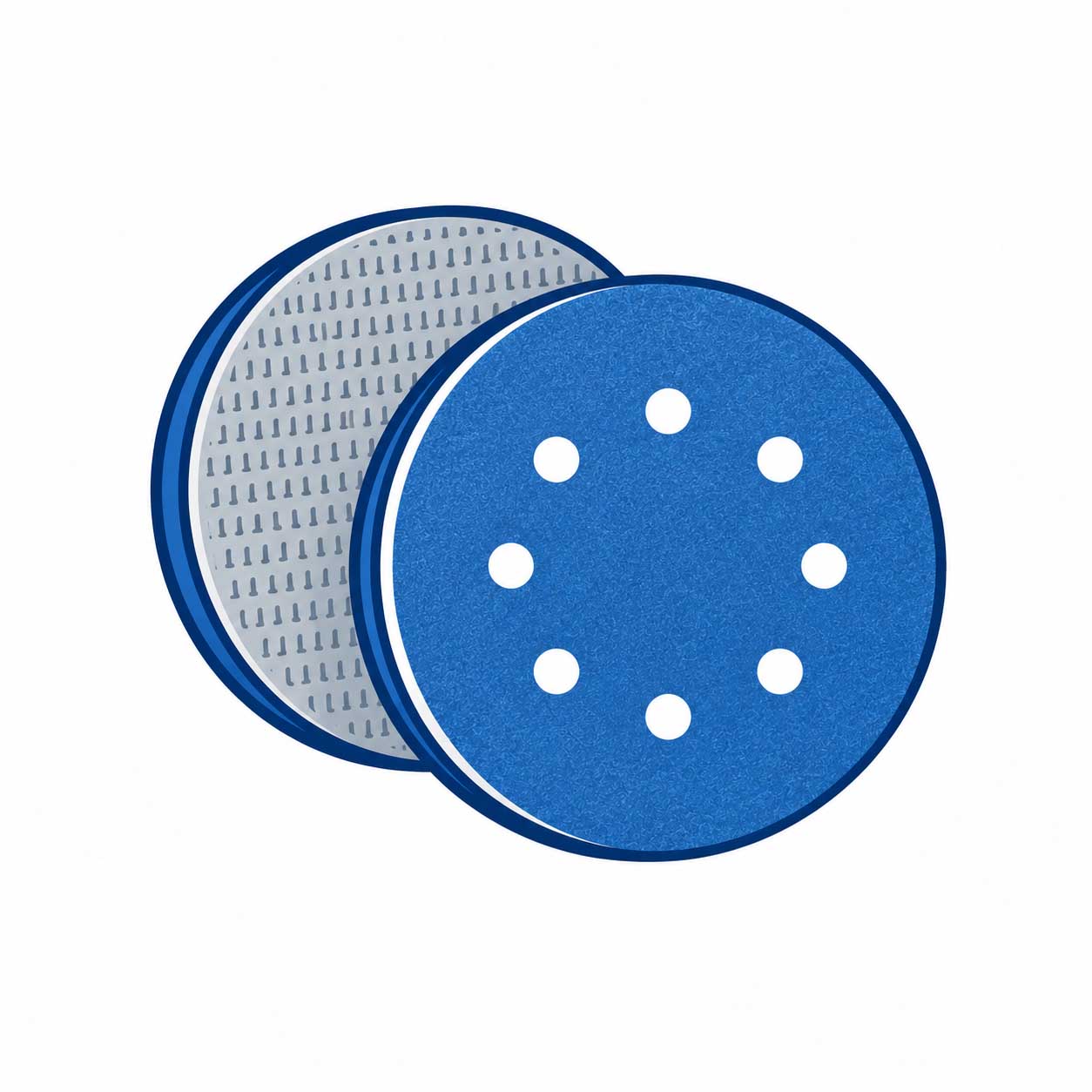
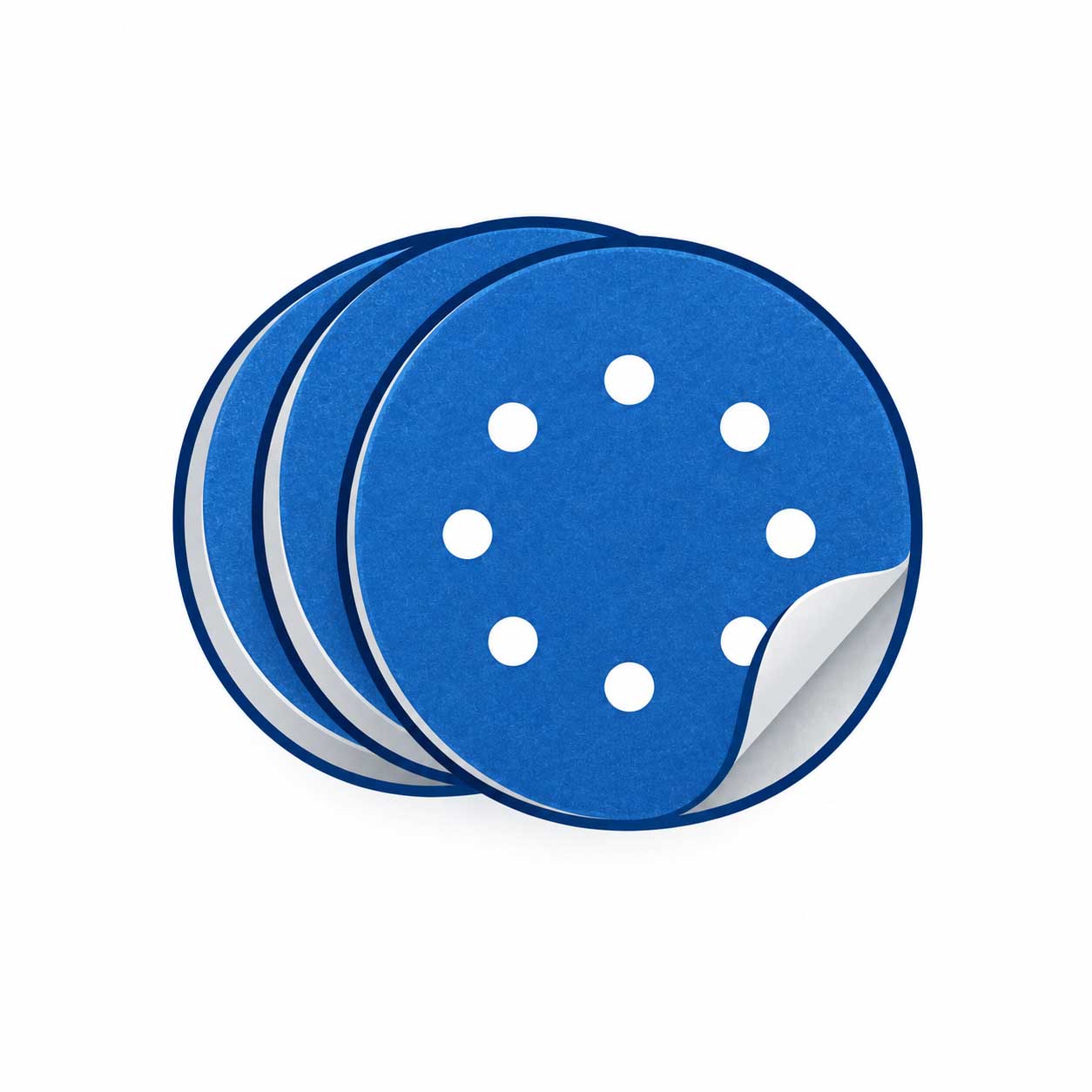
Aozhong provides Film Sanding Discs, Foam Sanding Discs, Wet & Dry Sandpaper, fine sanding abrasives, polishing pads, and polishing products for different automotive refinishing stages.
Not every paint defect should be repaired with the same sanding process.
Before selecting an abrasive, identify whether the defect is above the paint surface, within the clear coat, or related to a deeper coating failure.
| Paint Defect | Typical Condition | Correction Direction |
|---|---|---|
| Dust Nib | Small raised particle in finish | Local fine sanding + polishing |
| Minor Paint Run / Sag | Raised coating area | Controlled local leveling |
| Excessive Orange Peel | Uneven clear-coat texture | Fine surface leveling if permitted |
| Fine Sanding Marks | Visible scratch pattern | Finer abrasive + polishing |
| Minor Clear-Coat Scratch | Surface-level defect | Fine sanding / polishing |
| Fisheye | Crater caused by contamination | May require refinishing |
| Adhesion Failure | Peeling or delamination | Sanding alone is not a repair |
| Matte Finish Defect | Low-gloss finish | Follow paint-maker repair procedure |
Dust nibs are a normal defect-removal task in professional refinishing. I-CAR notes that nib sanding can be used for small dirt inclusions and should keep the repair area as small as practical.
The main rule is:
Correct the defect, not the entire clear coat.
If the problem is adhesion failure, contamination through multiple layers, or another coating-system failure, sanding and polishing alone may not provide a proper repair.
Dust nibs are small particles trapped in the paint or clear coat.
Because the defect is small, the sanding area should also remain small.
A typical process is:
Locate the Nib → Level the Raised Defect → Refine the Sanding Marks → Polish
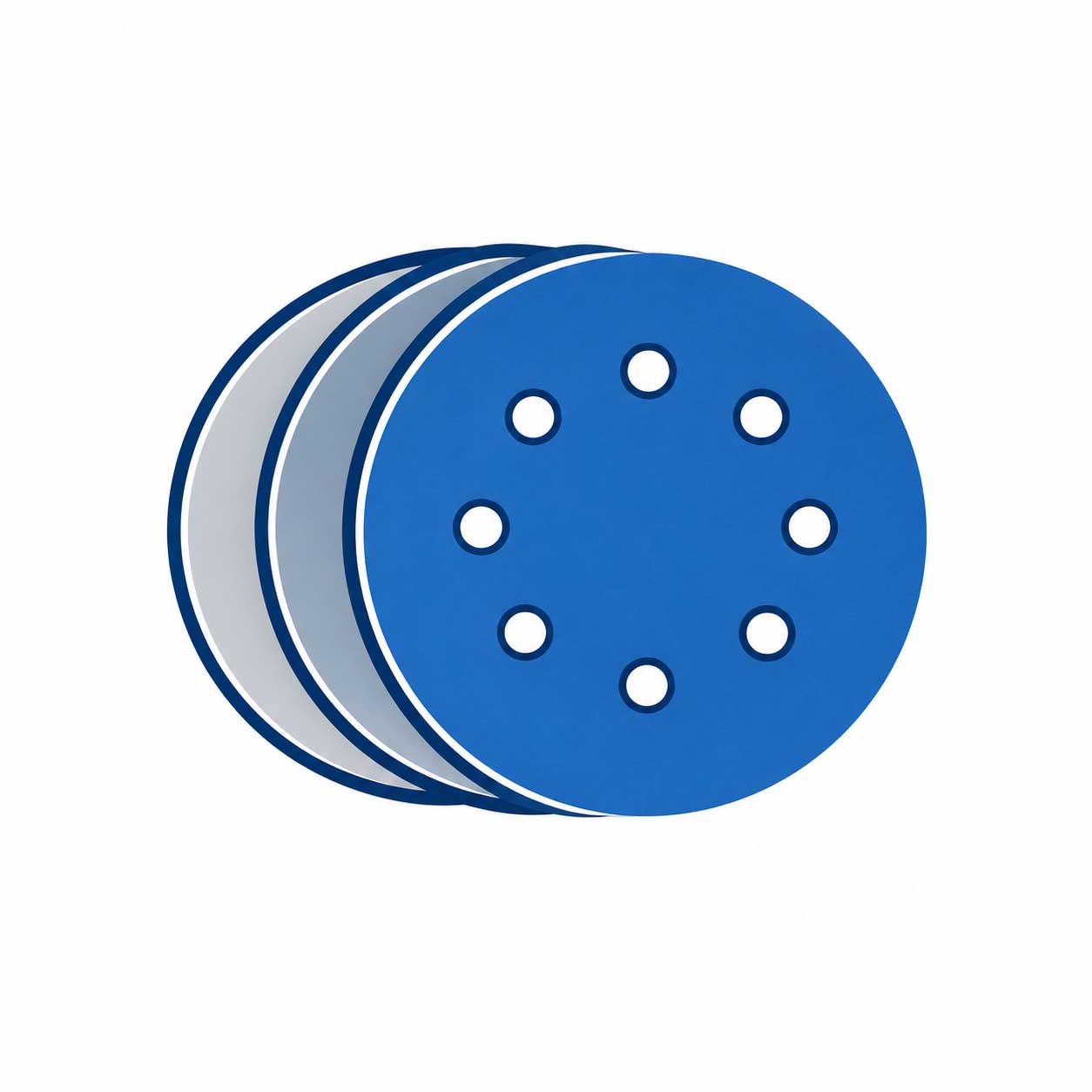
For this type of repair, Aozhong fine Film Sanding Discs and small-diameter Foam Sanding Discs can be evaluated for controlled spot sanding.
For example, Aozhong currently offers 3-inch foam-backed automotive finishing abrasives in fine grit ranges for paint correction and spot repair.
| Stage | Main Objective | Abrasive Direction |
|---|---|---|
| Initial Nib Leveling | Remove raised defect | Fine film / spot abrasive |
| Scratch Refinement | Reduce previous sanding marks | Finer film / foam abrasive |
| Pre-Polishing | Create a fine, consistent finish | Ultra-fine foam abrasive |
| Gloss Restoration | Remove final fine marks | Polishing pad + compound |
Use light, controlled pressure and inspect the area frequently.
I-CAR training guidance also recommends keeping nib repair localized and using light pressure so the technician does not remove unnecessary clear coat.
Orange peel is an uneven paint texture that resembles the surface of an orange.
Some orange peel is normal in automotive finishes. Correction is only needed when the texture is excessive or does not meet the required finish.
Sanding orange peel is essentially a leveling process:
Reduce High Texture → Create a More Uniform Surface → Refine Sanding Marks → Polish
| Stage | Reference Abrasive Direction | Main Purpose |
|---|---|---|
| Initial Texture Leveling | Fine sanding, process-dependent | Reduce high points |
| Intermediate Refinement | Finer abrasive | Remove initial sanding scratches |
| Pre-Polishing | Ultra-fine abrasive | Reduce visible sanding haze |
| Final Correction | Compound / polish | Restore gloss |
I-CAR describes sanding excessive orange peel as bringing the defect down toward the level of the surrounding surface. It also recommends progressing to finer grits to remove the scratches created by the previous abrasive.
A general professional defect-removal sequence may involve grits in the P1000–P3000 region, but this is not a fixed formula.
The correct starting grit depends on:
Do not automatically start with a coarse abrasive just because the orange peel is visible.
| Repair Problem | Main Risk | Recommended Approach |
|---|---|---|
| Small Run | Over-sanding surrounding clear | Keep correction local |
| High Sag | Uneven leveling | Reduce gradually |
| Edge of Run | Creating a low spot | Use controlled pressure |
| Sanding Marks | Visible scratches after leveling | Progress to finer abrasive |
| Curved Panel Run | Uneven abrasive contact | Use flexible backing where suitable |
Both wet and dry sanding can be used in automotive defect correction, but the abrasive must be designed for the selected process.
| Comparison | Dry Sanding | Wet Sanding |
|---|---|---|
| Surface Inspection | Easy to inspect continuously | Water can temporarily change appearance |
| Residue | Dry sanding dust | Water + sanding slurry |
| Abrasive Direction | Film / foam / approved dry abrasive | Wet & Dry abrasive |
| Dust Extraction | Can be combined with extraction | Not the same dust-control method |
| Typical Use | Spot correction and controlled refinement | Fine surface refinement |
| Key Requirement | Correct backing and tool | Water-resistant abrasive construction |
Aozhong provides Wet & Dry Sandpaper specifically designed for water-assisted and dry finishing applications, including automotive refinishing.
An important point is:
Film backing does not automatically mean the abrasive is suitable for wet sanding.
Wet sanding should only be used when the complete abrasive construction is designed or approved for water-assisted use.
I-CAR also notes that hand wet sanding is one method used for finish-defect correction, with finer grits used progressively after the defect has been leveled.
Polishing should not be used to compensate for an unfinished sanding process.
If deep sanding scratches remain, the polishing stage becomes slower and less predictable.
A better sequence is:
| Stage | Main Goal | Aozhong Product Direction |
|---|---|---|
| Defect Leveling | Remove raised defect | Fine Film Abrasive |
| Scratch Refinement | Reduce previous marks | Fine Film / Foam Disc |
| Ultra-Fine Sanding | Prepare for polishing | Fine Foam / Wet & Dry Abrasive |
| Compounding | Remove final sanding haze | Polishing Pad + Compound |
| Final Polishing | Improve gloss and clarity | Fine Polishing Pad |
Aozhong's automotive range currently includes fine film discs, foam sanding discs, Wet & Dry Sandpaper, polishing pads, and automotive polishing paste, allowing the sanding and polishing stages to be developed as one finishing system.
The most important rule is:
Each abrasive stage should remove the scratch pattern created by the previous stage.
Yes. Aozhong's automotive product range includes fine Film Sanding Discs, Foam Sanding Discs, Wet & Dry Sandpaper, fine finishing abrasives, polishing pads, and related polishing products. The specific grit and product structure should be selected according to the defect, coating system, and correction method.
Yes. Depending on the product, Aozhong supports custom diameter, grit, abrasive grain, foam structure, backing, hole pattern, printing, and packaging. Small-diameter discs such as 3-inch formats are particularly useful for localized automotive paint-correction applications.
Yes. Aozhong offers dedicated Wet & Dry Sandpaper as well as dry automotive finishing products. Buyers should specify whether the process is dry, wet, or needs both options because not every film or foam abrasive construction is automatically suitable for wet sanding.
Yes. Sample testing is recommended for fine automotive finishing because the clear coat, defect type, sanding machine, pressure, and polishing system can all affect the result. Buyers can compare cutting behavior, scratch consistency, surface finish, disc flexibility, and polishing time before confirming the bulk specification.
Yes. Aozhong supports OEM and private-label programs for automotive abrasive buyers and distributors. Depending on the product, customization can include grit, diameter, backing, foam structure, hole pattern, labels, printing, and packaging. Aozhong's current automotive range covers sanding discs, film abrasives, mesh products, foam abrasives, Wet & Dry Sandpaper, sanding sponges, and polishing products.
*I-CAR (Inter-Industry Conference on Auto Collision Repair) is an international non-profit organization that provides technical training, repair knowledge, and industry resources for automotive collision repair professionals.